
José Feliciano - Che Sarà Chords
Before you play, tune your guitar and use the tools below to set up your view and flow.
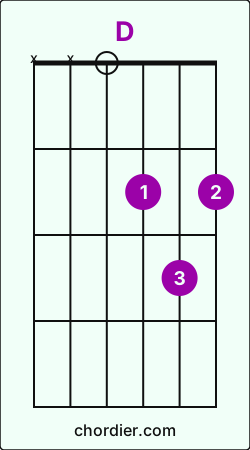 Guitar D chord diagram
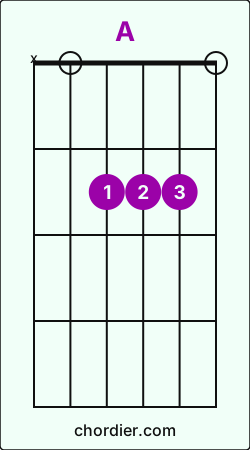 Guitar A chord diagram
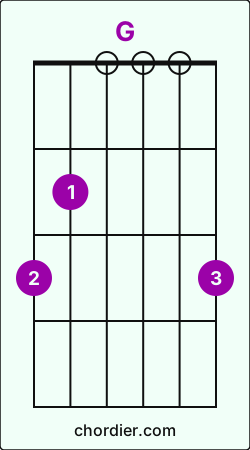 Guitar G chord diagram
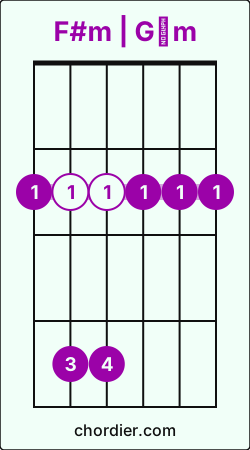 Guitar F#m | G♭m chord diagram
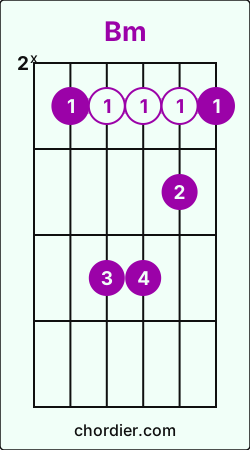 Guitar Bm chord diagram
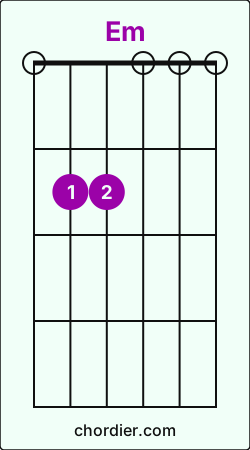 Guitar Em chord diagram
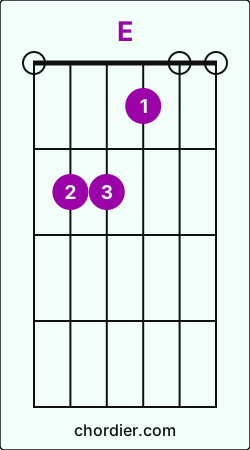 Guitar E chord diagram
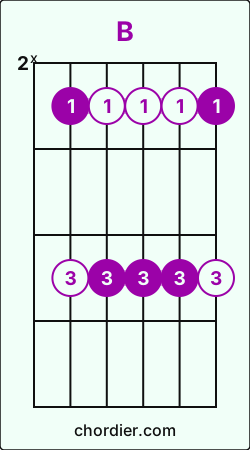 Guitar B chord diagram
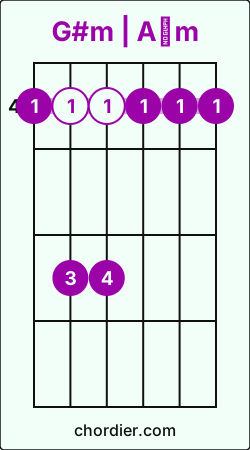 Guitar G#m | A♭m chord diagram
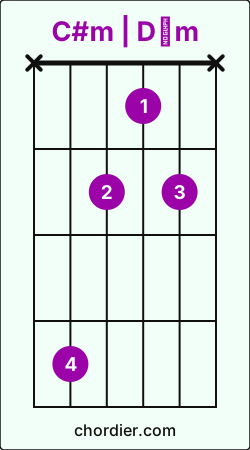 Guitar C#m | D♭m chord diagram
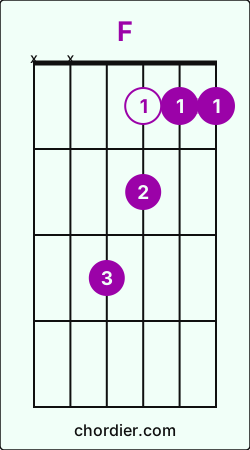 Guitar F chord diagram
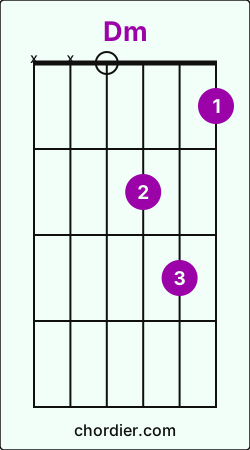 Guitar Dm chord diagram
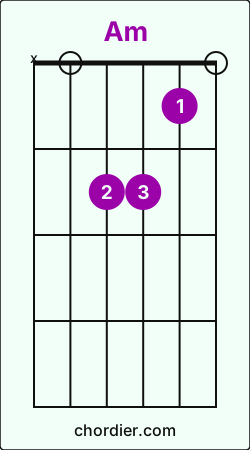 Guitar Am chord diagram
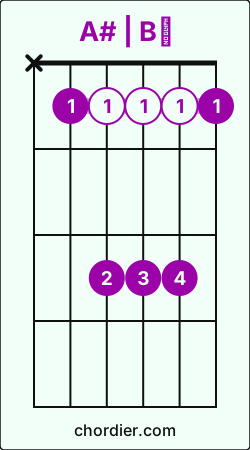 Guitar A# | B♭ chord diagram
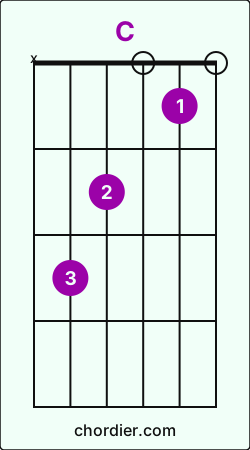 Guitar C chord diagram
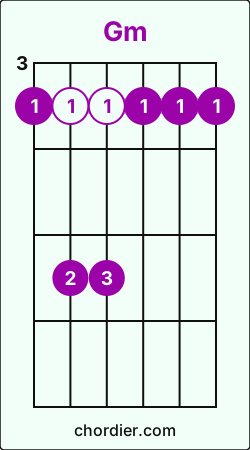 Guitar Gm chord diagram
[Opening]
Pae[D]se mio che [A]stai sulla colli[D]na
Dis[G]teso come un [A]vecchio addormenta[D]to
La [G]noia l’abban[A]dono il nien[F#m]te don la tua malat[Bm]tia
Pa[Em]ese mio ti [A]lascio Io vado [D]via
[verse 2]
Che sa[D]ra, che sa[Bm]ra, che sa[F#m]ra
Che sa[G]ra, della mia [A]vita chi lo [D]sa
So far [G]tutto o forse [A]niente da do[F#m]mani si ve[Bm]dra
E sa[Em]ra, sara [A]quel che sa[D]ra
[verse 3]
Gli [D]amici miei son [A]quasi tutti [D]via
E [G]gli altri parti[A]ranno dopo [D]me
Pec[G]cato Perche [A]stavo bene in [F#m]loro compag[Bm]nia
Ma [Em]tutto passa [A]tutto se ne [D]va
[chorus]
Che sa[D]ra, che sa[Bm]ra, che sa[F#m]ra
Che sa[G]ra, della mia [A]vita chi lo [D]sa
Con me [G]porto la chi[A]tarra, e se la [F#m]notte pian[Bm]gero
Una [Em]nenia di pa[A]ese suone[D]ro
[verse 4]
A[E]more mio ti [B]bacio sulla boc[E]ca
Che [A]fu la fonte [B]del mio primo a[E]more
Ti [A]do appunta[B]mento Come [Abm]quando non lo [C#m]so
[F#m]Ma so soltanto [Bm]che ritorne[E]ro
Che sa[E]ra, che sa[C#m]ra, che sa[Abm]ra
Che sa[A]ra, della mia [B]vita chi lo [E]sa
Con me [A]porto la chi[B]tarra, e se la [Abm]notte pian[C#m]gero
Una [F#m]nenia di pa[B]ese suone[E]ro
[chorus]
Che sa[F]ra, che sa[Dm]ra, che sa[Am]ra
Che sa[Bb]ra, della mia [C]vita chi lo [F]sa
Con me [Bb]porto la chi[C]tarra, e se la [Am]notte pian[Dm]gero
Una [Gm]nenia di pa[C]ese suone[F]ro
[Closing]
Che sa[F]ra, che sa[Dm]ra, che sa[Am]ra
Che sa[Bb]ra, della mia [C]vita chi lo [F]sa
So far [Bb]tutto o forse [C]niente da doma [Am]ni si ved [Dm]ra
E saGm ra, sara [C]quel che sa[F]ra
How to play Che Sarà on Guitar (Step-by-step)
José Feliciano - Che Sarà on guitar requires 16 chords and 31 core chord transitions. You can find the full step-by-step guide below. Before you start, tune your instrument. The song uses the ↓-↓↑-↑↓↑ pattern; practice it muted first, or simplify to downstrokes while you learn the changes.
Che Sarà uses these transitions most often: A → D (10), G → A (8), and D → G (6). These transitions may feel a little challenging at first, but with steady practice you can play this song quickly.When you are ready, begin with D - A chord transition.
1. D → A chord transition
To move from D to A;
- Lift your index finger from G string fret 2 and place it on D string fret 2.
- Slide your middle finger from E string fret 2 to G string fret 2.
- Slide your ring finger on B string from fret 3 to fret 2.
2. D → G chord transition
To move from D to G;
- Lift your index finger from G string fret 2 and place it on A string fret 2.
- Slide your middle finger from E string fret 2 to E string fret 3.
- Lift your ring finger from B string fret 3 and place it on E string fret 3.
3. G → A chord transition
To move from G to A;
- Lift your index finger from A string fret 2 and place it on D string fret 2.
- Slide your middle finger from E string fret 3 to G string fret 2.
- Lift your ring finger from E string fret 3 and place it on B string fret 2.
4. A → F#m chord transition
To move from A to F#m;
- While playing A, lift your middle finger from G string fret 2.
- Lift your index finger from D string fret 2 and place it on E string fret 2.
- Slide your ring finger from B string fret 2 to A string fret 4.
- Place pinky on D string fret 4.
5. F#m → Bm chord transition
To move from F#m to Bm;
- Keep index finger on E string fret 2.
- Lift your ring finger from A string fret 4 and place it on D string fret 4.
- Slide your pinky from D string fret 4 to G string fret 4.
- Place middle finger on B string fret 3.
6. Bm → Em chord transition
To move from Bm to Em;
- While playing Bm, first lift your index finger and pinky.
- Lift your middle finger from B string fret 3 and place it on A string fret 2.
- Slide your ring finger on D string from fret 4 to fret 2.
7. Em → A chord transition
To move from Em to A;
- Lift your middle finger from A string fret 2 and place it on G string fret 2.
- Slide your ring finger from D string fret 2 to B string fret 2.
- Place index finger on D string fret 2.
8. D → Bm chord transition
To move from D to Bm;
- Lift your index finger from G string fret 2 and place it on E string fret 2.
- Slide your middle finger from E string fret 2 to B string fret 3.
- Lift your ring finger from B string fret 3 and place it on D string fret 4.
- Place pinky on G string fret 4.
9. F#m → G chord transition
To move from F#m to G;
- While playing F#m, lift your pinky from D string fret 4.
- Lift your index finger from E string fret 2 and place it on A string fret 2.
- Slide your ring finger from A string fret 4 to E string fret 3.
- Place middle finger on E string fret 3.
10. D → E chord transition
To move from D to E;
- Slide your index finger on G string from fret 2 to fret 1.
- Slide your middle finger from E string fret 2 to A string fret 2.
- Lift your ring finger from B string fret 3 and place it on D string fret 2.
11. E → B chord transition
To move from E to B;
- Lift your index finger from G string fret 1 and place it on E string fret 2.
- Slide your middle finger from A string fret 2 to D string fret 4.
- Lift your ring finger from D string fret 2 and place it on G string fret 4.
- Place pinky on B string fret 4.
12. E → A chord transition
To move from E to A;
- Lift your index finger from G string fret 1 and place it on D string fret 2.
- Slide your middle finger from A string fret 2 to G string fret 2.
- Lift your ring finger from D string fret 2 and place it on B string fret 2.
13. A → B chord transition
To move from A to B;
- Lift your index finger from D string fret 2 and place it on E string fret 2.
- Slide your middle finger from G string fret 2 to D string fret 4.
- Lift your ring finger from B string fret 2 and place it on G string fret 4.
- Place pinky on B string fret 4.
14. B → Abm chord transition
To move from B to Abm;
- While playing B, lift your middle finger from D string fret 4.
- Slide your index finger on E string from fret 2 to fret 4.
- Slide your ring finger from G string fret 4 to A string fret 6.
- Lift your pinky from B string fret 4 and place it on D string fret 6.
15. Abm → C#m chord transition
To move from Abm to C#m;
- Lift your index finger from E string fret 4 and place it on G string fret 1.
- Slide your ring finger from A string fret 6 to B string fret 2.
- Lift your pinky from D string fret 6 and place it on A string fret 4.
- Place middle finger on D string fret 2.
16. C#m → F#m chord transition
To move from C#m to F#m;
- While playing C#m, lift your middle finger from D string fret 2.
- Lift your index finger from G string fret 1 and place it on E string fret 2.
- Slide your ring finger from B string fret 2 to A string fret 4.
- Lift your pinky from A string fret 4 and place it on D string fret 4.
17. Bm → E chord transition
To move from Bm to E;
- While playing Bm, lift your pinky from G string fret 4.
- Lift your index finger from E string fret 2 and place it on G string fret 1.
- Slide your middle finger from B string fret 3 to A string fret 2.
- Slide your ring finger on D string from fret 4 to fret 2.
18. E → C#m chord transition
To move from E to C#m;
- Keep index finger on G string fret 1.
- Lift your middle finger from A string fret 2 and place it on D string fret 2.
- Slide your ring finger from D string fret 2 to B string fret 2.
- Place pinky on A string fret 4.
19. Abm → A chord transition
To move from Abm to A;
- While playing Abm, lift your pinky from D string fret 6.
- Lift your index finger from E string fret 4 and place it on D string fret 2.
- Slide your ring finger from A string fret 6 to B string fret 2.
- Place middle finger on G string fret 2.
20. F#m → B chord transition
To move from F#m to B;
- Keep index finger on E string fret 2.
- Lift your ring finger from A string fret 4 and place it on G string fret 4.
- Slide your pinky from D string fret 4 to B string fret 4.
- Place middle finger on D string fret 4.
21. E → F chord transition
To move from E to F;
- Lift your index finger from G string fret 1 and place it on E string fret 1.
- Slide your middle finger from A string fret 2 to G string fret 2.
- Lift your ring finger from D string fret 2 and place it on A string fret 3.
- Place pinky on D string fret 3.
22. F → Dm chord transition
To move from F to Dm;
- While playing F, lift your pinky from D string fret 3.
- Lift your index finger from E string fret 1 and place it on E string fret 1.
- Keep middle finger on G string fret 2.
- Slide your ring finger from A string fret 3 to B string fret 3.
23. Dm → Am chord transition
To move from Dm to Am;
- Lift your index finger from E string fret 1 and place it on B string fret 1.
- Slide your middle finger from G string fret 2 to D string fret 2.
- Lift your ring finger from B string fret 3 and place it on G string fret 2.
24. Am → Bb chord transition
To move from Am to Bb;
- Lift your index finger from B string fret 1 and place it on A string fret 1.
- Slide your middle finger on D string from fret 2 to fret 3.
- Slide your ring finger on G string from fret 2 to fret 3.
- Place pinky on B string fret 3.
25. Bb → C chord transition
To move from Bb to C;
- While playing Bb, lift your pinky from B string fret 3.
- Lift your index finger from A string fret 1 and place it on B string fret 1.
- Slide your middle finger on D string from fret 3 to fret 2.
- Lift your ring finger from G string fret 3 and place it on A string fret 3.
26. C → F chord transition
To move from C to F;
- Lift your index finger from B string fret 1 and place it on E string fret 1.
- Slide your middle finger from D string fret 2 to G string fret 2.
- Keep ring finger on A string fret 3.
- Place pinky on D string fret 3.
27. F → Bb chord transition
To move from F to Bb;
- Lift your index finger from E string fret 1 and place it on A string fret 1.
- Slide your middle finger from G string fret 2 to D string fret 3.
- Lift your ring finger from A string fret 3 and place it on G string fret 3.
- Slide your pinky from D string fret 3 to B string fret 3.
28. C → Am chord transition
To move from C to Am;
- Keep index finger on B string fret 1.
- Keep middle finger on D string fret 2.
- Lift your ring finger from A string fret 3 and place it on G string fret 2.
29. Dm → Gm chord transition
To move from Dm to Gm;
- Lift your index finger from E string fret 1 and place it on A string fret 1.
- Slide your middle finger from G string fret 2 to E string fret 3.
- Keep ring finger on B string fret 3.
- Place pinky on E string fret 3.
30. Gm → C chord transition
To move from Gm to C;
- While playing Gm, lift your pinky from E string fret 3.
- Lift your index finger from A string fret 1 and place it on B string fret 1.
- Slide your middle finger from E string fret 3 to D string fret 2.
- Lift your ring finger from B string fret 3 and place it on A string fret 3.
31. Dm → C chord transition
To move from Dm to C;
- Lift your index finger from E string fret 1 and place it on B string fret 1.
- Slide your middle finger from G string fret 2 to D string fret 2.
- Lift your ring finger from B string fret 3 and place it on A string fret 3.
Che Sarà chord transition analysis
A short, data-driven summary of the chord flow in Che Sarà.
- Che Sarà includes 97 chord transitions, 31 of them unique.
- These transitions represent 0.03% of all chord transitions in Chordier.
- Che Sarà contains 3 of the top 10 transitions across Chordier.
- These transition patterns show how Che Sarà connects to the rest of Chordier. Mastering them helps you move to similar songs faster.After A, the most likely next chords across Chordier are D (29%), G (13%), and E (12%).
- A → D: 29%
- A → F#m: 6%
After D, the most likely next chords across Chordier are G (29%), A (17%), and Em (17%).- D → G: 29%
- D → A: 17%