
Bo Burnham - Goodbye Chords
Before you play, tune your guitar and use the tools below to set up your view and flow.
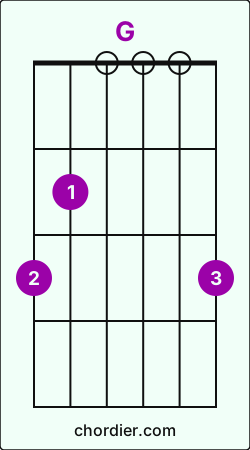 Guitar G chord diagram
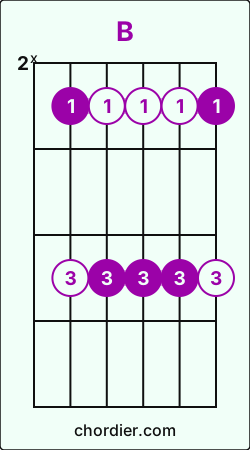 Guitar B chord diagram
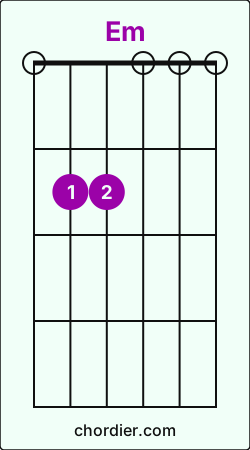 Guitar Em chord diagram
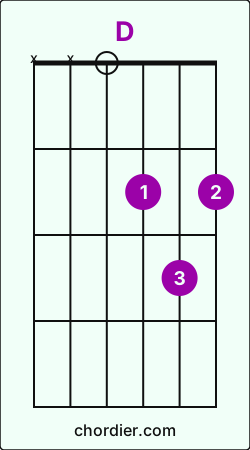 Guitar D chord diagram
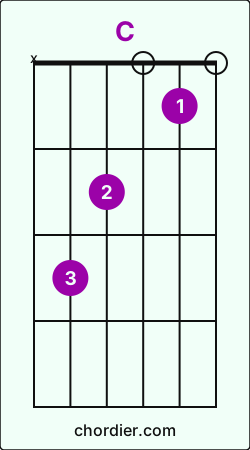 Guitar C chord diagram
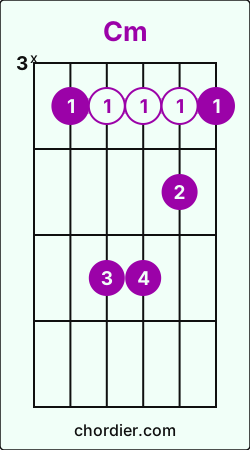 Guitar Cm chord diagram
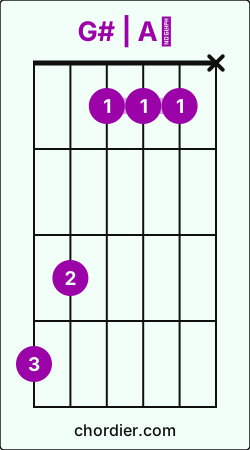 Guitar G# | A♭ chord diagram
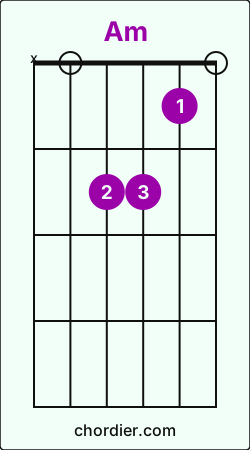 Guitar Am chord diagram
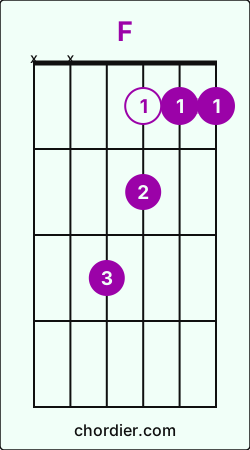 Guitar F chord diagram
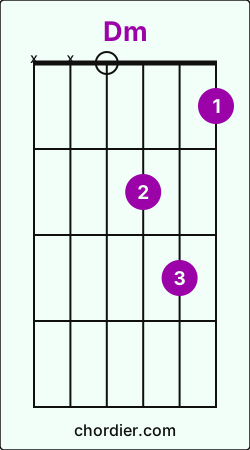 Guitar Dm chord diagram
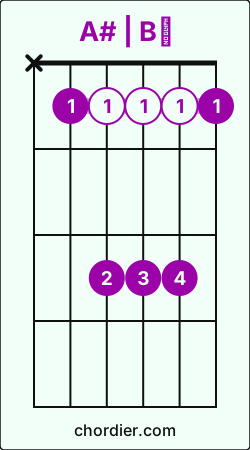 Guitar A# | B♭ chord diagram
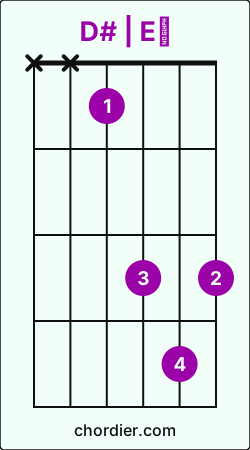 Guitar D# | E♭ chord diagram
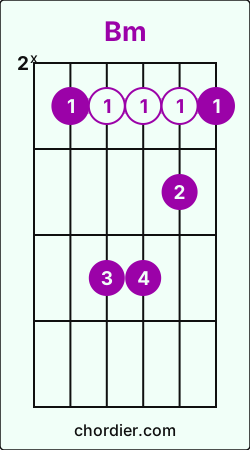 Guitar Bm chord diagram
[Opening]
[G]
So [G]long, [B]goodbye
I’ll [Em]see you when I [D]see you
You can [C]pick the street
I’ll [Cm]meet you on the [G]other [B]side [Em]
[verse 2]
[D]So [G]long, [B]goodbye
Do I [Em]really have to [D]finish?
Do [C]returns always [Cm]diminish?
Did I [G]say that [B]right? [Em]
[verse 3]
Does [G] [G#]anybody [Am]want to [Em]joke
When no one’s [F]laughing in the [C] [D]background?
[G]So [Dm]this is [F]how it [C] [Bb]ends
[G]I [Dm]promise to [Bb]never go out[Eb]side a[C]gain[G]
[verse 4]
So [G] [G]long, [G] [B]Bye!
I’m [Em]slowly losing [D]power, has it [C]only been an [Cm]hour?
No, that [G]can’t be [B]right [Em]
[verse 5]
[D]So [G]l[G]ong [G] [B]goodbye [B] [B]
Hey, [Em]here’s a fun [D]idea
How about [C]I sit on the [Cm]
Couch and I watch [G]you next [B]time? [Em]
[verse 6]
I [G]wanna [G#]hear you [Am]tell a [Em]joke
When no one’s [F]laughing in the [C] [D]background?
[G]So [Dm]this is [F]how it [C] [Bb]ends
[G]I [Dm]promise to [Bb]never go [Eb]outside [C]again
[verse 7]
[Em]Am I going [Am]crazy? Would I even [D]know?
Am I right back where I [G]started 14 [B]years ago?
[Em]Wanna guess the [Am]ending?
If it ever [D]does, I swear to God that [G]all I’ve ever [B]wanted was:
A [Em]little bit of everything all of the [Em]time
[Am]A bit of everything all of the [D]time
[G]Apathy’s a tragedy, and boredom is a crime
[B]I’m finished playing and I’m staying inside
[C]If I wake up in a [G]house that’s full of [D]smoke
I’ll panic, so [Em]call me up and [D]tell me a joke
[C]When I’m fully [G]irrelevant and totally [D]broken, damn it
[Em]Call me up and [Bm]tell me a [C]joke, oh [G]shit
[B]You’re really joking at a [Em]time like [D]this?
[Closing]
[G]Well, well, [Am]look who’s inside again?
[D]Went out to look for a [Em]reason to [D]hide again
[G]Well, well, [Am]buddy, you found [D]it
Now [Em]come out [Em]with your [Eb]hands up
We’ve [C]got you [Cm]sur[G]rounded
How to play Goodbye on Guitar (Step-by-step)
Bo Burnham - Goodbye on guitar requires 13 chords and 28 core chord transitions. You can find the full step-by-step guide below. Before you start, tune your instrument. The song uses the ↓↑-↓↑-↓↑-↓↑ pattern; practice it muted first, or simplify to downstrokes while you learn the changes.
Goodbye uses these transitions most often: G → B (12), B → Em (11), and D → G (9). These transitions may feel a little challenging at first, but with steady practice you can play this song quickly.When you are ready, begin with G - B chord transition.
1. G → B chord transition
To move from G to B;
- Lift your index finger from A string fret 2 and place it on E string fret 2.
- Slide your middle finger from E string fret 3 to D string fret 4.
- Lift your ring finger from E string fret 3 and place it on G string fret 4.
- Place pinky on B string fret 4.
2. B → Em chord transition
To move from B to Em;
- While playing B, first lift your index finger and pinky.
- Lift your middle finger from D string fret 4 and place it on A string fret 2.
- Slide your ring finger from G string fret 4 to D string fret 2.
3. Em → D chord transition
To move from Em to D;
- Lift your middle finger from A string fret 2 and place it on E string fret 2.
- Slide your ring finger from D string fret 2 to B string fret 3.
- Place index finger on G string fret 2.
4. D → C chord transition
To move from D to C;
- Lift your index finger from G string fret 2 and place it on B string fret 1.
- Slide your middle finger from E string fret 2 to D string fret 2.
- Lift your ring finger from B string fret 3 and place it on A string fret 3.
5. C → Cm chord transition
To move from C to Cm;
- Keep index finger on B string fret 1.
- Slide your middle finger on D string from fret 2 to fret 1.
- Keep ring finger on A string fret 3.
- Place pinky on E string fret 3.
6. Cm → G chord transition
To move from Cm to G;
- While playing Cm, lift your pinky from E string fret 3.
- Lift your index finger from B string fret 1 and place it on A string fret 2.
- Slide your middle finger from D string fret 1 to E string fret 3.
- Lift your ring finger from A string fret 3 and place it on E string fret 3.
7. D → G chord transition
To move from D to G;
- Lift your index finger from G string fret 2 and place it on A string fret 2.
- Slide your middle finger from E string fret 2 to E string fret 3.
- Lift your ring finger from B string fret 3 and place it on E string fret 3.
8. Em → G chord transition
To move from Em to G;
- Lift your middle finger from A string fret 2 and place it on E string fret 3.
- Slide your ring finger from D string fret 2 to E string fret 3.
- Place index finger on A string fret 2.
9. G → G# chord transition
To move from G to G#;
- Lift your index finger from A string fret 2 and place it on D string fret 1.
- Slide your middle finger from E string fret 3 to A string fret 3.
- Lift your ring finger from E string fret 3 and place it on E string fret 4.
10. G# → Am chord transition
To move from G# to Am;
- Lift your index finger from D string fret 1 and place it on B string fret 1.
- Slide your middle finger from A string fret 3 to D string fret 2.
- Lift your ring finger from E string fret 4 and place it on G string fret 2.
11. Am → Em chord transition
To move from Am to Em;
- While playing Am, lift your index finger from B string fret 1.
- Lift your middle finger from D string fret 2 and place it on A string fret 2.
- Slide your ring finger from G string fret 2 to D string fret 2.
12. Em → F chord transition
To move from Em to F;
- Lift your middle finger from A string fret 2 and place it on G string fret 2.
- Slide your ring finger from D string fret 2 to A string fret 3.
- Place index finger on E string fret 1.
- Place pinky on D string fret 3.
13. F → C chord transition
To move from F to C;
- While playing F, lift your pinky from D string fret 3.
- Lift your index finger from E string fret 1 and place it on B string fret 1.
- Slide your middle finger from G string fret 2 to D string fret 2.
- Keep ring finger on A string fret 3.
14. G → Dm chord transition
To move from G to Dm;
- Lift your index finger from A string fret 2 and place it on E string fret 1.
- Slide your middle finger from E string fret 3 to G string fret 2.
- Lift your ring finger from E string fret 3 and place it on B string fret 3.
15. Dm → F chord transition
To move from Dm to F;
- Lift your index finger from E string fret 1 and place it on E string fret 1.
- Keep middle finger on G string fret 2.
- Slide your ring finger from B string fret 3 to A string fret 3.
- Place pinky on D string fret 3.
16. C → Bb chord transition
To move from C to Bb;
- Lift your index finger from B string fret 1 and place it on A string fret 1.
- Slide your middle finger on D string from fret 2 to fret 3.
- Lift your ring finger from A string fret 3 and place it on G string fret 3.
- Place pinky on B string fret 3.
17. Bb → G chord transition
To move from Bb to G;
- While playing Bb, lift your pinky from B string fret 3.
- Slide your index finger on A string from fret 1 to fret 2.
- Slide your middle finger from D string fret 3 to E string fret 3.
- Lift your ring finger from G string fret 3 and place it on E string fret 3.
18. Dm → Bb chord transition
To move from Dm to Bb;
- Lift your index finger from E string fret 1 and place it on A string fret 1.
- Slide your middle finger from G string fret 2 to D string fret 3.
- Lift your ring finger from B string fret 3 and place it on G string fret 3.
- Place pinky on B string fret 3.
19. Bb → Eb chord transition
To move from Bb to Eb;
- Lift your index finger from A string fret 1 and place it on D string fret 1.
- Slide your middle finger from D string fret 3 to E string fret 3.
- Keep ring finger on G string fret 3.
- Slide your pinky on B string from fret 3 to fret 4.
20. Eb → C chord transition
To move from Eb to C;
- While playing Eb, lift your pinky from B string fret 4.
- Lift your index finger from D string fret 1 and place it on B string fret 1.
- Slide your middle finger from E string fret 3 to D string fret 2.
- Lift your ring finger from G string fret 3 and place it on A string fret 3.
21. C → G chord transition
To move from C to G;
- Lift your index finger from B string fret 1 and place it on A string fret 2.
- Slide your middle finger from D string fret 2 to E string fret 3.
- Lift your ring finger from A string fret 3 and place it on E string fret 3.
22. C → Em chord transition
To move from C to Em;
- While playing C, lift your index finger from B string fret 1.
- Lift your middle finger from D string fret 2 and place it on A string fret 2.
- Slide your ring finger from A string fret 3 to D string fret 2.
23. Am → D chord transition
To move from Am to D;
- Lift your index finger from B string fret 1 and place it on G string fret 2.
- Slide your middle finger from D string fret 2 to E string fret 2.
- Lift your ring finger from G string fret 2 and place it on B string fret 3.
24. B → C chord transition
To move from B to C;
- While playing B, lift your pinky from B string fret 4.
- Lift your index finger from E string fret 2 and place it on B string fret 1.
- Slide your middle finger on D string from fret 4 to fret 2.
- Lift your ring finger from G string fret 4 and place it on A string fret 3.
25. Em → Bm chord transition
To move from Em to Bm;
- Lift your middle finger from A string fret 2 and place it on B string fret 3.
- Slide your ring finger on D string from fret 2 to fret 4.
- Place index finger on E string fret 2.
- Place pinky on G string fret 4.
26. Bm → C chord transition
To move from Bm to C;
- While playing Bm, lift your pinky from G string fret 4.
- Lift your index finger from E string fret 2 and place it on B string fret 1.
- Slide your middle finger from B string fret 3 to D string fret 2.
- Lift your ring finger from D string fret 4 and place it on A string fret 3.
27. G → Am chord transition
To move from G to Am;
- Lift your index finger from A string fret 2 and place it on B string fret 1.
- Slide your middle finger from E string fret 3 to D string fret 2.
- Lift your ring finger from E string fret 3 and place it on G string fret 2.
28. Em → Eb chord transition
To move from Em to Eb;
- Lift your middle finger from A string fret 2 and place it on E string fret 3.
- Slide your ring finger from D string fret 2 to G string fret 3.
- Place index finger on D string fret 1.
- Place pinky on B string fret 4.
Goodbye chord transition analysis
A short, data-driven summary of the chord flow in Goodbye.
- Goodbye includes 114 chord transitions, 28 of them unique.
- These transitions represent 0.03% of all chord transitions in Chordier.
- Goodbye contains 7 of the top 10 transitions across Chordier.
- These transition patterns show how Goodbye connects to the rest of Chordier. Mastering them helps you move to similar songs faster.After G, the most likely next chords across Chordier are C (25%), D (24%), and Am (13%).
- G → D: 24%
- G → Am: 13%
After Em, the most likely next chords across Chordier are C (26%), G (18%), and D (17%).- Em → G: 18%
- Em → D: 17%