
Guitar E chord diagram
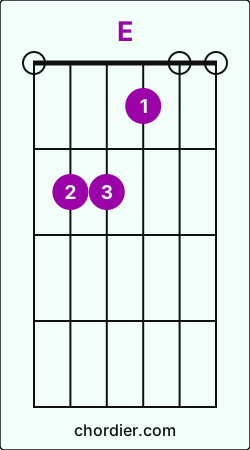
E is one of the essential Guitar chords. On Chordier, this chord appears in 727 different songs. On this page, you can find how to play E, alternative positions, and core chord transitions.
To play E, follow these steps: Place index finger on G string fret 1. Place middle finger on A string fret 2. Place ring finger on D string fret 2.
Tips
- Place G string with your index finger and A string with your middle finger with a vertical finger angle so nearby strings ring clearly without buzz.
- On G string, press fret 1 with your index finger close to the fret wire (not on top) for a cleaner tone.
- To play E cleanly, every involved string should ring clearly. Make sure both fretted strings (A string, D string, and G string) and open strings sound clean. After shaping the chord, pluck each string one by one and confirm there is no muted or buzzing note.
Chord Theory
- Notes
- E - G# - B
- Intervals
- 1 - 3 - 5
- Chord Type
- Major — bright and happy character
- Difficulty
- Beginner
- Voicings
- 7
Alternative Positions
Different ways to play E on the fretboard, from beginner-friendly to advanced voicings.
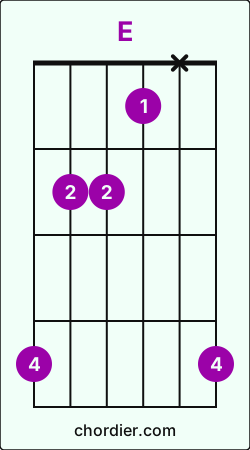 Guitar E chord diagram4-2-2-1-x-4
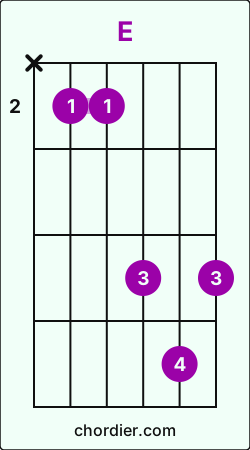 Guitar E chord diagramx-2-2-4-5-4
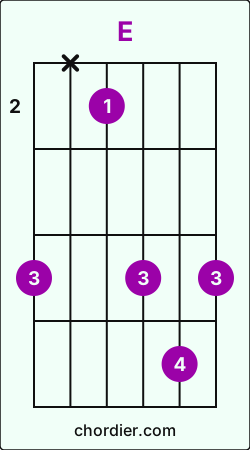 Guitar E chord diagram4-x-2-4-5-4
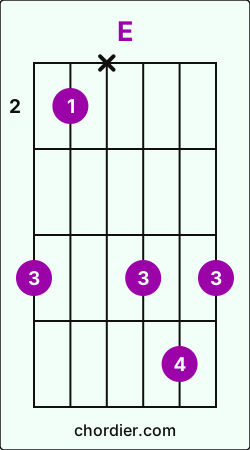 Guitar E chord diagram4-2-x-4-5-4
Easy Transition Chords
These chords have similar finger positions to E, making them ideal for practice transitions.
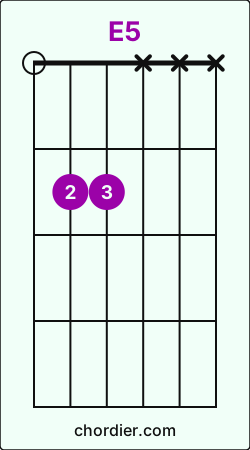
1. E → E5 chord transition
To move from E to E5, follow these steps:
- While playing E, lift your index finger from G string fret 1.
- Keep middle finger on A string fret 2.
- Keep ring finger on D string fret 2.
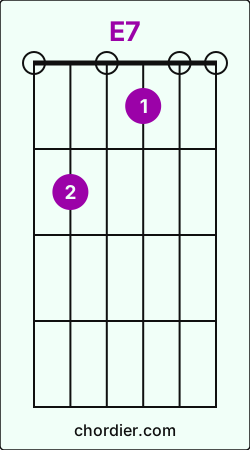
2. E → E7 chord transition
To move from E to E7, follow these steps:
- While playing E, lift your ring finger from D string fret 2.
- Keep index finger on G string fret 1.
- Keep middle finger on A string fret 2.
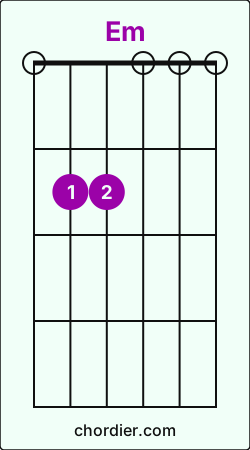
3. E → Em chord transition
To move from E to Em, follow these steps:
- While playing E, lift your index finger from G string fret 1.
- Keep middle finger on A string fret 2.
- Keep ring finger on D string fret 2.
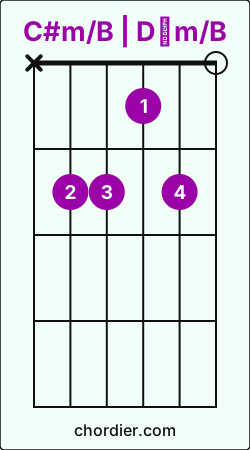
4. E → C#m/B | D♭m/B chord transition
To move from E to C#m/B | D♭m/B, follow these steps:
- Keep index finger on G string fret 1.
- Keep middle finger on A string fret 2.
- Keep ring finger on D string fret 2.
- Place pinky on B string fret 2.
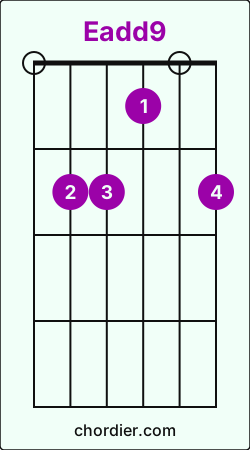
5. E → Eadd9 chord transition
To move from E to Eadd9, follow these steps:
- Keep index finger on G string fret 1.
- Keep middle finger on A string fret 2.
- Keep ring finger on D string fret 2.
- Place pinky on E string fret 2.
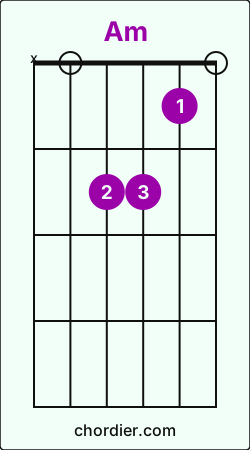
6. E → Am chord transition
To move from E to Am, follow these steps:
- Lift your index finger from G string fret 1 and place it on B string fret 1.
- Slide your middle finger from A string fret 2 to D string fret 2.
- Lift your ring finger from D string fret 2 and place it on G string fret 2.
Most Common Transitions
The most frequent chord transitions from E across songs on this site.
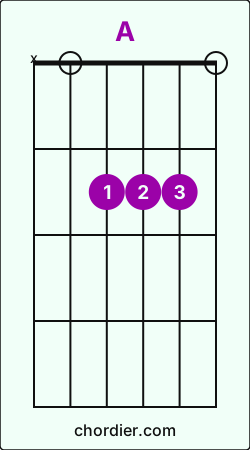
1. E → A chord transition
To move from E to A, follow these steps:
- Lift your index finger from G string fret 1 and place it on D string fret 2.
- Slide your middle finger from A string fret 2 to G string fret 2.
- Lift your ring finger from D string fret 2 and place it on B string fret 2.
On Chordier, songs containing E use the transition to A at 25.4%. You can practice this transition in 317 different songs.
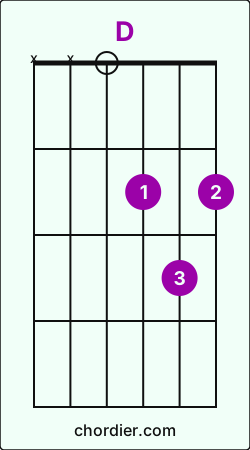
2. E → D chord transition
To move from E to D, follow these steps:
- Slide your index finger on G string from fret 1 to fret 2.
- Slide your middle finger from A string fret 2 to E string fret 2.
- Lift your ring finger from D string fret 2 and place it on B string fret 3.
On Chordier, songs containing E use the transition to D at 13.7%. You can practice this transition in 146 different songs.
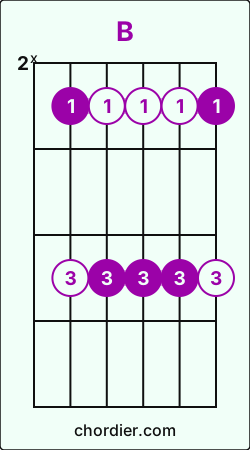
3. E → B chord transition
To move from E to B, follow these steps:
- Lift your index finger from G string fret 1 and place it on E string fret 2.
- Slide your middle finger from A string fret 2 to D string fret 4.
- Lift your ring finger from D string fret 2 and place it on G string fret 4.
- Place pinky on B string fret 4.
On Chordier, songs containing E use the transition to B at 11.2%. You can practice this transition in 120 different songs.
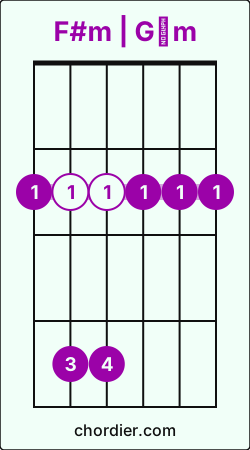
4. E → F#m chord transition
To move from E to F#m, follow these steps:
- While playing E, lift your middle finger from A string fret 2.
- Lift your index finger from G string fret 1 and place it on E string fret 2.
- Slide your ring finger from D string fret 2 to A string fret 4.
- Place pinky on D string fret 4.
On Chordier, songs containing E use the transition to F#m at 8.7%. You can practice this transition in 116 different songs.
Compatible Scales
These scales include E and highlight the companion chords that fit the same key.
Songs Using E Chord
Popular songs that feature the E chord, perfect for practice.
Songs in Original Key of E
Frequently Asked Questions
Is E easy to play on Guitar?
Guitar E is beginner-friendly. It spans 2 frets. Practice slowly to keep each note clean.
What is the easiest way to play E?
There is a simpler alternative for E on Guitar. The alternative voicing uses fingering 4-2-x-4-5-4. This voicing reduces hand movement and makes clean transitions easier.
What chords transition well from E on Guitar?
Guitar E commonly moves to A and D. Based on our catalog data, E to A is recorded 2,344 times, appears in 317 songs, and represents 25.4% of outgoing E transitions. E to D is recorded 1,263 times, appears in 146 songs, and represents 13.7%.
What songs use the E chord?
Ariana Grande - Problem Chords is one of 8 songs that use the E chord.