
Guitar Gaug chord diagram
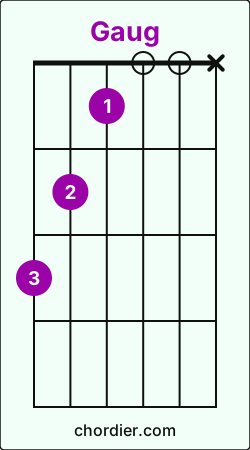
Gaug is one of the essential Guitar chords. On this page, you can find how to play Gaug, alternative positions, and core chord transitions.
To play Gaug, follow these steps: Place index finger on D string fret 1. Place middle finger on A string fret 2. Place ring finger on E string fret 3.
Tips
- Place D string with your index finger and A string with your middle finger with a vertical finger angle so nearby strings ring clearly without buzz.
- On D string, press fret 1 with your index finger close to the fret wire (not on top) for a cleaner tone.
- Finger choices on Gaug can be optimized for the next chord. For example, when moving from Gaug to Caug, using on E string, use your pinky, on A string, use your ring finger, and on D string, use your middle finger helps preserve hand position with minimal movement.
- Mute unused strings to avoid unwanted ringing.
Chord Theory
- Notes
- G - B - D#
- Intervals
- 1 - 3 - #5
- Chord Type
- Augmented — mysterious and rising
- Difficulty
- Intermediate
- Voicings
- 7
Alternative Positions
Different ways to play Gaug on the fretboard, from beginner-friendly to advanced voicings.
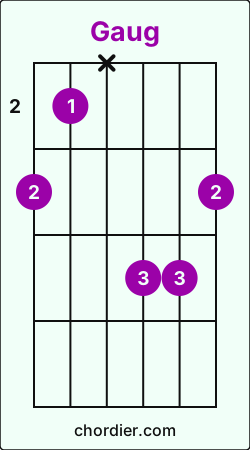 Guitar Gaug chord diagram3-2-x-4-4-3
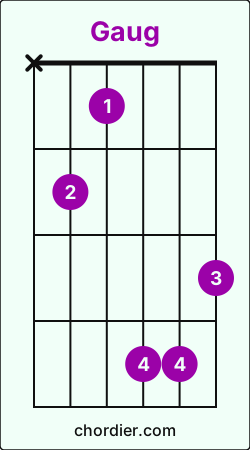 Guitar Gaug chord diagramx-2-1-4-4-3
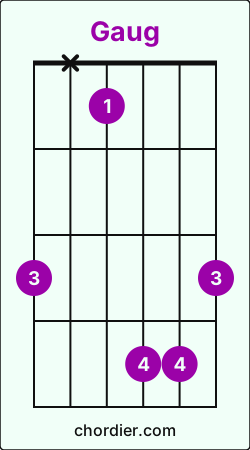 Guitar Gaug chord diagram3-x-1-4-4-3
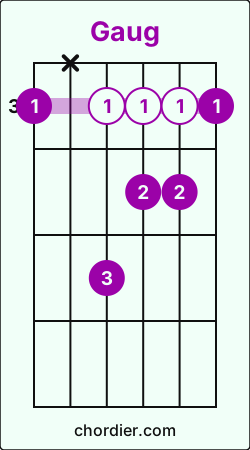 Guitar Gaug chord diagram3-x-5-4-4-3
Easy Transition Chords
These chords have similar finger positions to Gaug, making them ideal for practice transitions.
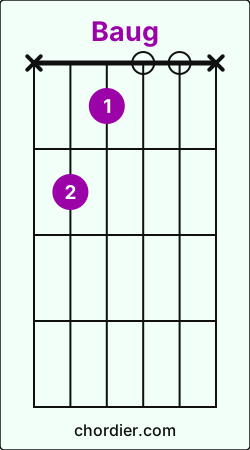
1. Gaug → Baug chord transition
To move from Gaug to Baug, follow these steps:
- While playing Gaug, lift your ring finger from E string fret 3.
- Keep index finger on D string fret 1.
- Keep middle finger on A string fret 2.
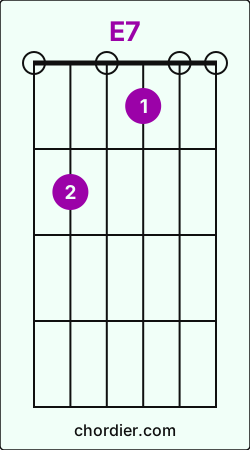
2. Gaug → E7 chord transition
To move from Gaug to E7, follow these steps:
- While playing Gaug, lift your ring finger from E string fret 3.
- Lift your index finger from D string fret 1 and place it on G string fret 1.
- Keep middle finger on A string fret 2.
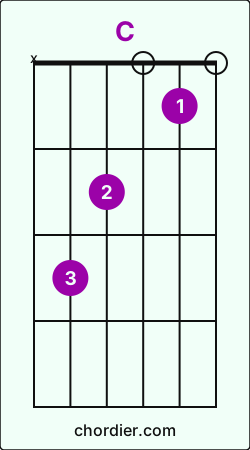
3. Gaug → C chord transition
To move from Gaug to C, follow these steps:
- Lift your index finger from D string fret 1 and place it on B string fret 1.
- Slide your middle finger from A string fret 2 to D string fret 2.
- Lift your ring finger from E string fret 3 and place it on A string fret 3.
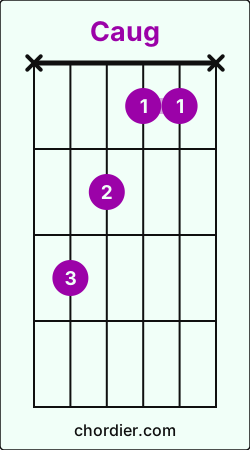
4. Gaug → Caug chord transition
To move from Gaug to Caug, follow these steps:
- Lift your index finger from D string fret 1 and place it on G string fret 1.
- Slide your middle finger from A string fret 2 to D string fret 2.
- Lift your ring finger from E string fret 3 and place it on A string fret 3.
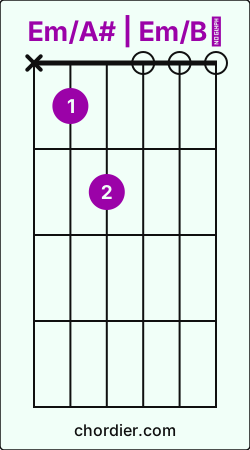
5. Gaug → Em/A# | Em/B♭ chord transition
To move from Gaug to Em/A# | Em/B♭, follow these steps:
- While playing Gaug, lift your ring finger from E string fret 3.
- Lift your index finger from D string fret 1 and place it on A string fret 1.
- Slide your middle finger from A string fret 2 to D string fret 2.
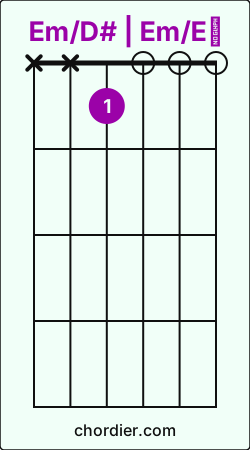
6. Gaug → Em/D# | Em/E♭ chord transition
To move from Gaug to Em/D# | Em/E♭, follow these steps:
- While playing Gaug, first lift your middle finger and ring finger.
- Keep index finger on D string fret 1.
Compatible Scales
These scales include Gaug and highlight the companion chords that fit the same key.
Frequently Asked Questions
How difficult is the Gaug chord on Guitar?
Gaug requires moderate control on Guitar. The voicing covers 3 frets. Keep your wrist relaxed to improve accuracy.
Is there a simpler voicing for Gaug?
You can try an easier Guitar voicing for Gaug. The alternative voicing uses fingering 3-x-5-4-4-3. Use this shape first, then return to the full form as control improves.