
Guitar G#m/C | A♭m/C chord diagram
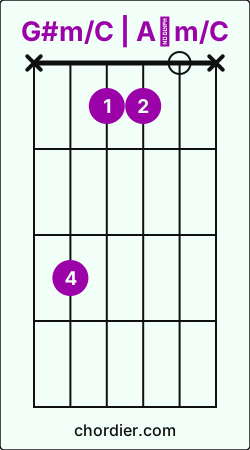
G#m/C | A♭m/C is one of the essential Guitar chords. On this page, you can find how to play G#m/C | A♭m/C, alternative positions, and core chord transitions.
To play G#m/C | A♭m/C, follow these steps: Place index finger on D string fret 1. Place middle finger on G string fret 1. Place pinky on A string fret 3. G#m/C can also be written as A♭m/C; these names are enharmonic equivalents that represent the same pitch class.
Tips
- Place D string with your index finger and G string with your middle finger with a vertical finger angle so nearby strings ring clearly without buzz.
- On D string, press fret 1 with your index finger close to the fret wire (not on top) for a cleaner tone.
- Mute unused strings to avoid unwanted ringing.
- To play G#m/C | A♭m/C cleanly, every involved string should ring clearly. Make sure both fretted strings (A string, D string, and G string) and open strings sound clean. After shaping the chord, pluck each string one by one and confirm there is no muted or buzzing note.
Chord Theory
- Notes
- G# - B - D#
- Intervals
- 1 - b3 - 5
- Chord Type
- Minor — soft and melancholic character
- Difficulty
- Intermediate
- Voicings
- 7
Alternative Positions
Different ways to play G#m/C | A♭m/C on the fretboard, from beginner-friendly to advanced voicings.
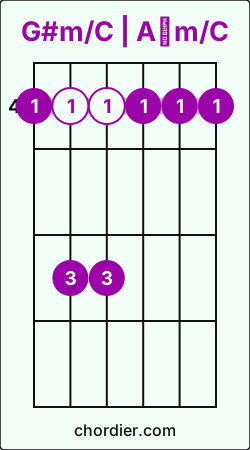 Guitar G#m/C | A♭m/C chord diagram4-6-6-4-4-4
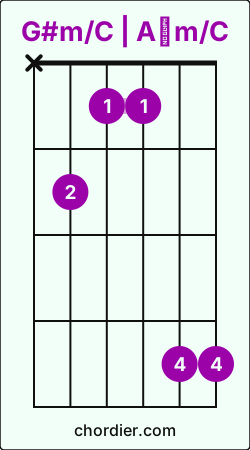 Guitar G#m/C | A♭m/C chord diagramx-2-1-1-4-4
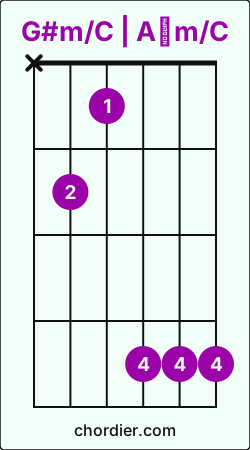 Guitar G#m/C | A♭m/C chord diagramx-2-1-4-4-4
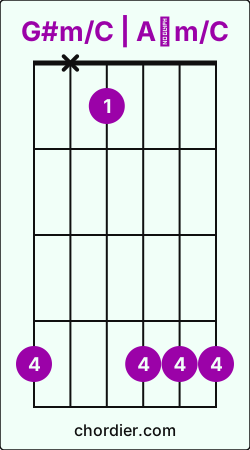 Guitar G#m/C | A♭m/C chord diagram4-x-1-4-4-4
Easy Transition Chords
These chords have similar finger positions to G#m/C | A♭m/C, making them ideal for practice transitions.
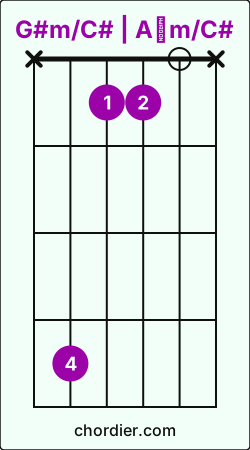
1. G#m/C | A♭m/C → G#m/C# | A♭m/C# chord transition
To move from G#m/C | A♭m/C to G#m/C# | A♭m/C#, follow these steps:
- Keep index finger on D string fret 1.
- Keep middle finger on G string fret 1.
- Slide your pinky on A string from fret 3 to fret 4.
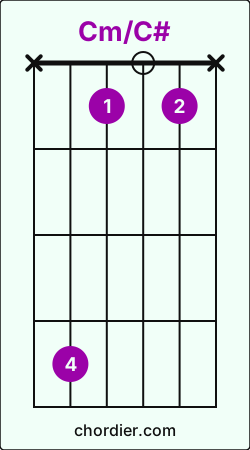
2. G#m/C | A♭m/C → Cm/C# chord transition
To move from G#m/C | A♭m/C to Cm/C#, follow these steps:
- Keep index finger on D string fret 1.
- Lift your middle finger from G string fret 1 and place it on B string fret 1.
- Slide your pinky on A string from fret 3 to fret 4.
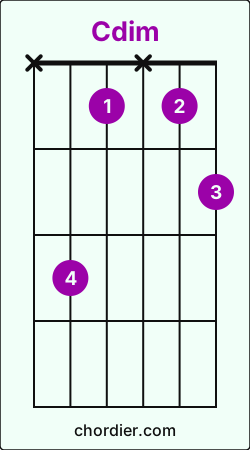
3. G#m/C | A♭m/C → Cdim chord transition
To move from G#m/C | A♭m/C to Cdim, follow these steps:
- Keep index finger on D string fret 1.
- Lift your middle finger from G string fret 1 and place it on B string fret 1.
- Keep pinky on A string fret 3.
- Place ring finger on E string fret 2.
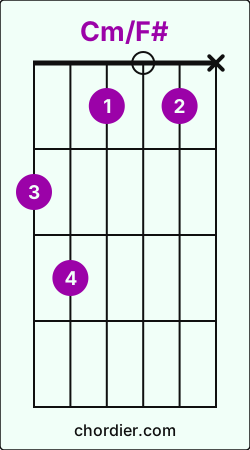
4. G#m/C | A♭m/C → Cm/F# chord transition
To move from G#m/C | A♭m/C to Cm/F#, follow these steps:
- Keep index finger on D string fret 1.
- Lift your middle finger from G string fret 1 and place it on B string fret 1.
- Keep pinky on A string fret 3.
- Place ring finger on E string fret 2.
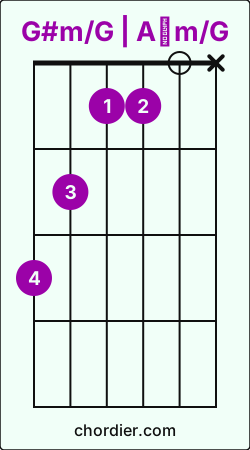
5. G#m/C | A♭m/C → G#m/G | A♭m/G chord transition
To move from G#m/C | A♭m/C to G#m/G | A♭m/G, follow these steps:
- Keep index finger on D string fret 1.
- Keep middle finger on G string fret 1.
- Lift your pinky from A string fret 3 and place it on E string fret 3.
- Place ring finger on A string fret 2.
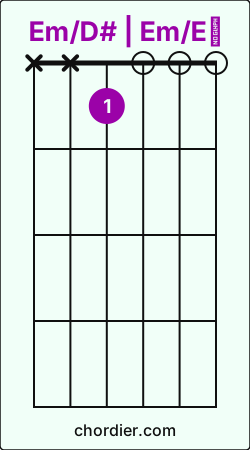
6. G#m/C | A♭m/C → Em/D# | Em/E♭ chord transition
To move from G#m/C | A♭m/C to Em/D# | Em/E♭, follow these steps:
- While playing G#m/C | A♭m/C, first lift your middle finger and pinky.
- Keep index finger on D string fret 1.
Compatible Scales
These scales include G#m/C | A♭m/C and highlight the companion chords that fit the same key.
Frequently Asked Questions
Is G#m/C | A♭m/C easy to play on Guitar?
Guitar G#m/C | A♭m/C is generally intermediate. It spans 3 frets. Consistent practice helps the shape feel natural.
What is the easiest way to play G#m/C | A♭m/C?
There is a simpler alternative for G#m/C | A♭m/C on Guitar. The alternative voicing uses fingering 4-x-1-4-4-4. This voicing reduces hand movement and makes clean transitions easier.