
Ray Stevens - I’m My Own Grandpa Chords
Before you play, tune your guitar and use the tools below to set up your view and flow.
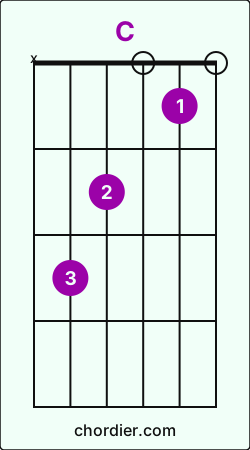 Guitar C chord diagram
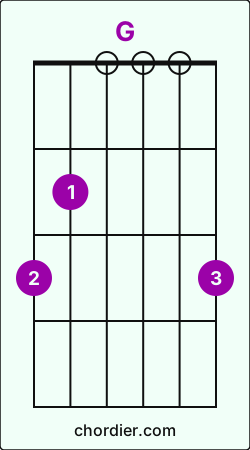 Guitar G chord diagram
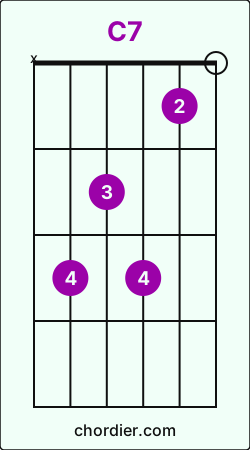 Guitar C7 chord diagram
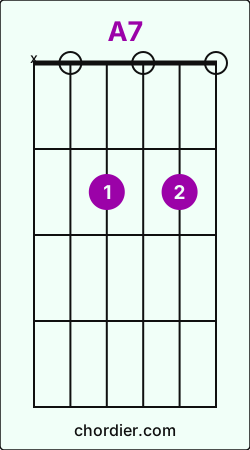 Guitar A7 chord diagram
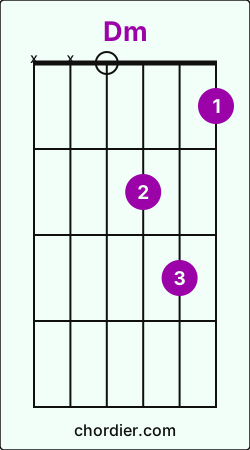 Guitar Dm chord diagram
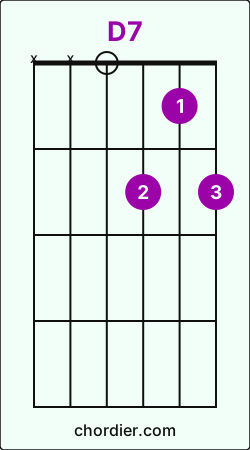 Guitar D7 chord diagram
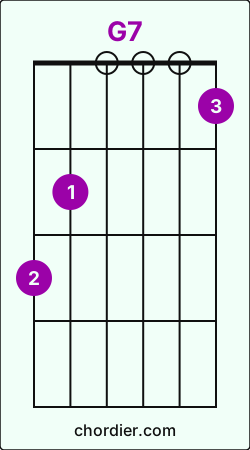 Guitar G7 chord diagram
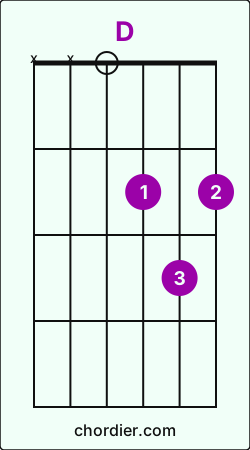 Guitar D chord diagram
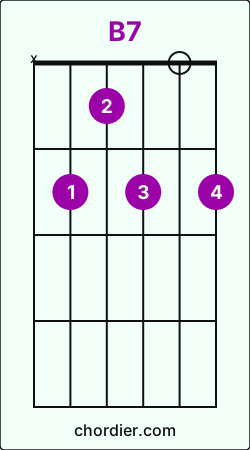 Guitar B7 chord diagram
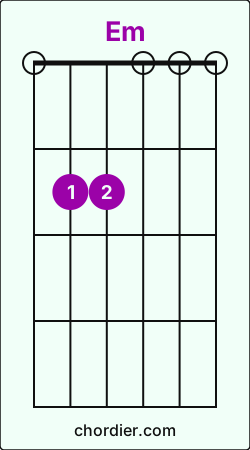 Guitar Em chord diagram
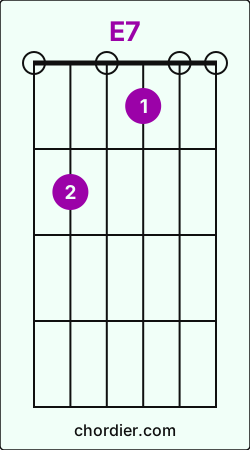 Guitar E7 chord diagram
[Opening]
[C]Many, many years ago when [G]I was 23
I was married to a widow who was [C]pretty as can be
This [C7]widow had a [A7]grownup daughter [Dm]who had hair of red
My [D7]father fell in love with her and [G]soon they too were [G7]wed
[verse 2]
This [C]made my dad my son in law and [G]really changed my life
For now my daughter was my [G7]mother ’cause she [C]was my father’s wife
And to [C7]complicate the [A7]matter even [Dm]though it brought me joy
I [D7]soon became the father of a [G]bouncing baby [G7]boy
[verse 3]
My [C]little baby then became a [G]brother in law to dad
And [G7]so he became my uncle though it [C]mad me very sad
For [C7]if he were my [A7]uncle then that [Dm]also made him brother
Of the [D7]widows grownup daughter,
who was of [G]course my step[G7]mother [A7]
[verse 4]
My [D]father’s wife then had a son who [A7]kept them on the run
And [A7]he became my grandchild for he [D]was my daughter’s son
My [D7]wife is now my [B7]mother’s mother and it [Em]makes me blue
Because [E7]although she is my wife she’s my [A7]grandmother too
[verse 5]
Now [D]if my wife is my grandmother then [A7]I’m her grandchild
And [A7]every time I think of it, [D]nearly drives me wild
‘Cause [D7]now I have be[B7]come the strangest [Em]case you ever saw
As [E7]husband of my grandmother I [A7]am my own grandpa
[Closing]
Oh [D]I’m my [A7]own grand[D]pa
[G]I’m my own [A7]grandpa
It sounds [D]funny I [D7]know but it [G]really is so
Oh [D]I’m my [A7]own grand[D]pa
How to play I'm My Own Grandpa on Guitar (Step-by-step)
Ray Stevens - I'm My Own Grandpa on guitar requires 11 chords and 17 core chord transitions. You can find the full step-by-step guide below. Before you start, tune your instrument. The song uses the ↓↑-↓↑-↓↑-↓↑ pattern; practice it muted first, or simplify to downstrokes while you learn the changes.
I'm My Own Grandpa uses these transitions most often: A7 → D (8), G → G7 (5), and D → A7 (4). These transitions may feel a little challenging at first, but with steady practice you can play this song quickly.When you are ready, begin with C - G chord transition.
1. C → G chord transition
To move from C to G;
- Lift your index finger from B string fret 1 and place it on A string fret 2.
- Slide your middle finger from D string fret 2 to E string fret 3.
- Lift your ring finger from A string fret 3 and place it on E string fret 3.
2. C → C7 chord transition
To move from C to C7;
- Keep index finger on B string fret 1.
- Keep middle finger on D string fret 2.
- Keep ring finger on A string fret 3.
- Place pinky on G string fret 3.
3. C7 → A7 chord transition
To move from C7 to A7;
- While playing C7, first lift your ring finger and pinky.
- Lift your index finger from B string fret 1 and place it on D string fret 2.
- Slide your middle finger from D string fret 2 to B string fret 2.
4. A7 → Dm chord transition
To move from A7 to Dm;
- Lift your index finger from D string fret 2 and place it on E string fret 1.
- Slide your middle finger from B string fret 2 to G string fret 2.
- Place ring finger on B string fret 3.
5. Dm → D7 chord transition
To move from Dm to D7;
- Lift your index finger from E string fret 1 and place it on B string fret 1.
- Keep middle finger on G string fret 2.
- Slide your ring finger from B string fret 3 to E string fret 2.
6. D7 → G chord transition
To move from D7 to G;
- Lift your index finger from B string fret 1 and place it on A string fret 2.
- Slide your middle finger from G string fret 2 to E string fret 3.
- Slide your ring finger on E string from fret 2 to fret 3.
7. G → G7 chord transition
To move from G to G7;
- Keep index finger on A string fret 2.
- Keep middle finger on E string fret 3.
- Slide your ring finger on E string from fret 3 to fret 1.
8. G7 → C chord transition
To move from G7 to C;
- Lift your index finger from A string fret 2 and place it on B string fret 1.
- Slide your middle finger from E string fret 3 to D string fret 2.
- Lift your ring finger from E string fret 1 and place it on A string fret 3.
9. G7 → A7 chord transition
To move from G7 to A7;
- While playing G7, lift your ring finger from E string fret 1.
- Lift your index finger from A string fret 2 and place it on D string fret 2.
- Slide your middle finger from E string fret 3 to B string fret 2.
10. A7 → D chord transition
To move from A7 to D;
- Lift your index finger from D string fret 2 and place it on G string fret 2.
- Slide your middle finger from B string fret 2 to E string fret 2.
- Place ring finger on B string fret 3.
11. D → D7 chord transition
To move from D to D7;
- Lift your index finger from G string fret 2 and place it on B string fret 1.
- Slide your middle finger from E string fret 2 to G string fret 2.
- Lift your ring finger from B string fret 3 and place it on E string fret 2.
12. D7 → B7 chord transition
To move from D7 to B7;
- Lift your index finger from B string fret 1 and place it on D string fret 1.
- Slide your middle finger from G string fret 2 to A string fret 2.
- Lift your ring finger from E string fret 2 and place it on G string fret 2.
- Place pinky on E string fret 2.
13. B7 → Em chord transition
To move from B7 to Em;
- While playing B7, first lift your index finger and pinky.
- Keep middle finger on A string fret 2.
- Lift your ring finger from G string fret 2 and place it on D string fret 2.
14. Em → E7 chord transition
To move from Em to E7;
- While playing Em, lift your ring finger from D string fret 2.
- Keep middle finger on A string fret 2.
- Place index finger on G string fret 1.
15. E7 → A7 chord transition
To move from E7 to A7;
- Lift your index finger from G string fret 1 and place it on D string fret 2.
- Slide your middle finger from A string fret 2 to B string fret 2.
16. D → G chord transition
To move from D to G;
- Lift your index finger from G string fret 2 and place it on A string fret 2.
- Slide your middle finger from E string fret 2 to E string fret 3.
- Lift your ring finger from B string fret 3 and place it on E string fret 3.
17. G → A7 chord transition
To move from G to A7;
- While playing G, lift your ring finger from E string fret 3.
- Lift your index finger from A string fret 2 and place it on D string fret 2.
- Slide your middle finger from E string fret 3 to B string fret 2.
I'm My Own Grandpa chord transition analysis
A short, data-driven summary of the chord flow in I'm My Own Grandpa.
- I'm My Own Grandpa includes 56 chord transitions, 17 of them unique.
- These transitions represent 0.01% of all chord transitions in Chordier.
- I'm My Own Grandpa contains 2 of the top 10 transitions across Chordier.
- These transition patterns show how I'm My Own Grandpa connects to the rest of Chordier. Mastering them helps you move to similar songs faster.After A7, the most likely next chords across Chordier are D (42%), D7 (18%), and Dm (12%).
- A7 → D: 42%
- A7 → Dm: 12%
After D, the most likely next chords across Chordier are G (29%), A (17%), and Em (17%).- D → G: 29%
- D → D7: 1%