
Gordon MacRae - The Surrey With the Fringe on Top Chords
Before you play, tune your guitar and use the tools below to set up your view and flow.
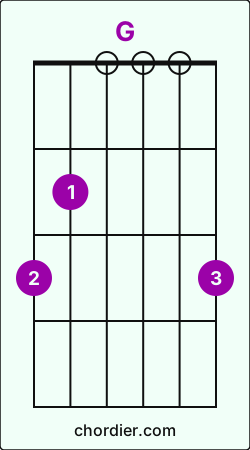 Guitar G chord diagram
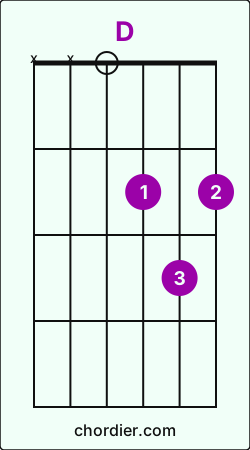 Guitar D chord diagram
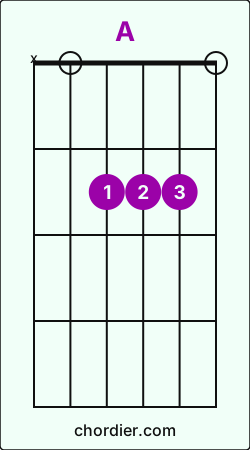 Guitar A chord diagram
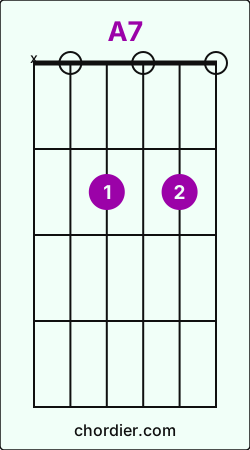 Guitar A7 chord diagram
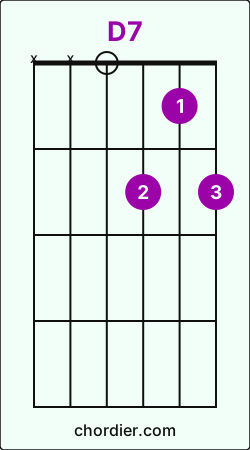 Guitar D7 chord diagram
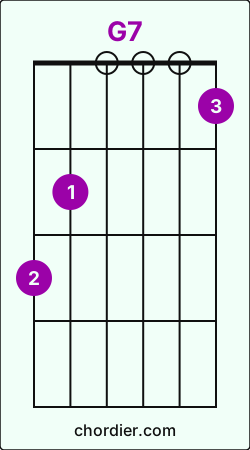 Guitar G7 chord diagram
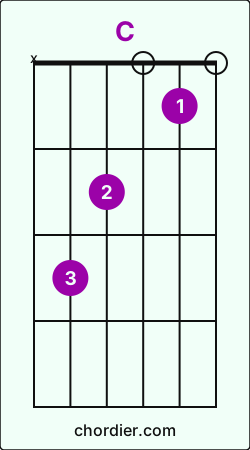 Guitar C chord diagram
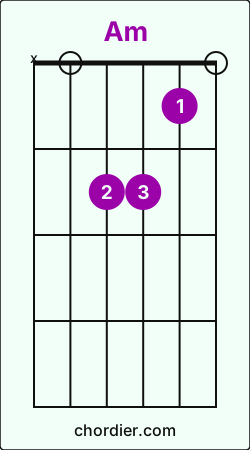 Guitar Am chord diagram
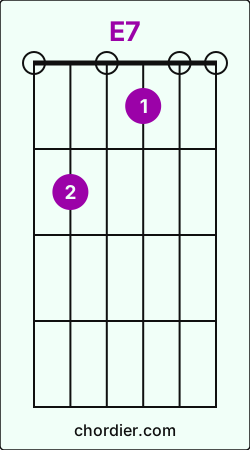 Guitar E7 chord diagram
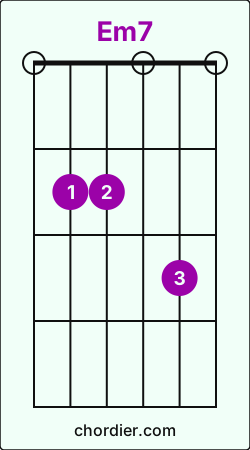 Guitar Em7 chord diagram
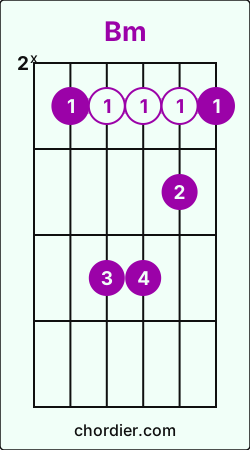 Guitar Bm chord diagram
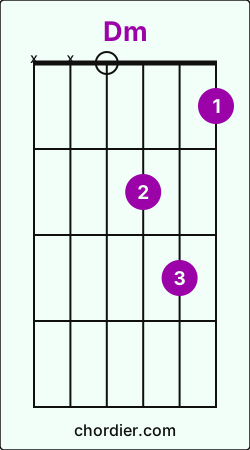 Guitar Dm chord diagram
[Opening]
[G]Chicks and [D]ducks and [G]geese better [D]scurry
[G]When I [D]take ya [G]out in the [D]surrey
[G]When I [D]take ya [G]out in the [D]surrey
With the [A]fringe on [D]top
[verse 2]
[G]Watch that [D]fringe and [G]see how it [D]flutters
[G]When I [D]drive them [G]high steppin’ [D]strutters
[G]Nosey [D]pokes’ll [G]peek thru their [D]shutters
And their [A7]eyes’ll [D7]pop
[verse 3]
The [G7]wheels are yellow, the [C]upholstery’s [A]brown
The [G]dashboard’s genuine [C]leather
With [A7]isinglass curtains y’ can [D]roll right down
In [A7]case there’s a change in the [D7]wea[G7]ther
[verse 4]
[G]Two bright sidelights winkin’ and blinkin’
[G]Ain’t no [D]finer rig I’m a thinkin’
[G]You can [D]keep your [G]rig if you’re thinkin’
That I’d [C]care t’ [Am]swap
For that [D]shiny little surrey
With the [Am]fringe [D]on the [G]top
[verse 5]
[G]All the world’ll fly in a flurry
[G]When I take you out in the surrey
[G]When I take you out in the surrey
With the [E7]fringe [A]on [D]top
[verse 6]
[G]When we [D]hit that [G]road hell for [D]leather
[G]Cats and [D]dogs’ll [G]dance in the [D]heather
[G]Birds and [D]frogs’ll [G]sing all to[D]gether
[E7]And the [A]toads will [D7]hop
[verse 7]
The [G]wind ‘ll whistle as we [C]rattle a[A]long,
The [G]cows ‘ll moo in the [C]clover.
The [A7]river will ripple out a [D]whispered song,
And [A7]whisper it over and [D7]over.
[verse 8]
[G]Don’t you wisht it’d go on forever?
[G]Don’t you wisht it’d go on forever?
[G]Don’t you [D]wisht it’d [G]go on [D]forever,
(And it’d [C]never [A]stop?
In that [D]shiny little surrey
With the [D7]fringe [D]on the [G]top [C] [G]
[verse 9]
[G]I can [D]see the [G]stars gettin’ [D]blurry
[G]When we [D]ride back [G]home in the [D]surrey
[G]Riding [D]slowly [G]home in the [D]surrey
With the [A]fringe on [D7]top
[verse 10]
[G]I can [D]feel the [G]day gettin’ [D]older
[G]Feel a [D]sleepy head [G]near my [D]shoulder
[G]Noddin’, [D]droopin’ [G]close to my [D]shoulder
‘Til it [C]falls ker[D7]plop
[verse 11]
The [G7]sun is swimmin’ on the [C]rim of a [A]hill
The [G]moon is takin’ a [C]header
And [A7]just as I’m thinkin’ all the [D]earth is still
A [Em7]lark wakes [A7]up in the [D7]meader
[verse 12]
[G]Hush you [D]bird my [G]baby’s a [D]sleepin’
[G]Maybe [D]got a [G]dream worth a [D]keepin’
[G]Whoa you [D]team, and [G]just keep a [D]creepin’
At a [C]slow [Bm]clip[A]clop
[Closing]
Don’t you [G]hurry with the [Dm]surrey
With the [Am]fringe [D7]on the [G]top
How to play Surrey With the Fringe on Top on Guitar (Step-by-step)
Gordon MacRae - Surrey With the Fringe on Top on guitar requires 12 chords and 28 core chord transitions. You can find the full step-by-step guide below. Before you start, tune your instrument. The song uses the ↓-↓↑-↓↑-↓↑ pattern; practice it muted first, or simplify to downstrokes while you learn the changes.
Surrey With the Fringe on Top uses these transitions most often: G → D (40), D → G (37), and G → C (6). These transitions may feel a little challenging at first, but with steady practice you can play this song quickly.When you are ready, begin with G - D chord transition.
1. G → D chord transition
To move from G to D;
- Lift your index finger from A string fret 2 and place it on G string fret 2.
- Slide your middle finger from E string fret 3 to E string fret 2.
- Lift your ring finger from E string fret 3 and place it on B string fret 3.
2. D → A chord transition
To move from D to A;
- Lift your index finger from G string fret 2 and place it on D string fret 2.
- Slide your middle finger from E string fret 2 to G string fret 2.
- Slide your ring finger on B string from fret 3 to fret 2.
3. D → A7 chord transition
To move from D to A7;
- While playing D, lift your ring finger from B string fret 3.
- Lift your index finger from G string fret 2 and place it on D string fret 2.
- Slide your middle finger from E string fret 2 to B string fret 2.
4. A7 → D7 chord transition
To move from A7 to D7;
- Lift your index finger from D string fret 2 and place it on B string fret 1.
- Slide your middle finger from B string fret 2 to G string fret 2.
- Place ring finger on E string fret 2.
5. D7 → G7 chord transition
To move from D7 to G7;
- Lift your index finger from B string fret 1 and place it on A string fret 2.
- Slide your middle finger from G string fret 2 to E string fret 3.
- Slide your ring finger on E string from fret 2 to fret 1.
6. G7 → C chord transition
To move from G7 to C;
- Lift your index finger from A string fret 2 and place it on B string fret 1.
- Slide your middle finger from E string fret 3 to D string fret 2.
- Lift your ring finger from E string fret 1 and place it on A string fret 3.
7. C → A chord transition
To move from C to A;
- Lift your index finger from B string fret 1 and place it on D string fret 2.
- Slide your middle finger from D string fret 2 to G string fret 2.
- Lift your ring finger from A string fret 3 and place it on B string fret 2.
8. A → G chord transition
To move from A to G;
- Lift your index finger from D string fret 2 and place it on A string fret 2.
- Slide your middle finger from G string fret 2 to E string fret 3.
- Lift your ring finger from B string fret 2 and place it on E string fret 3.
9. G → C chord transition
To move from G to C;
- Lift your index finger from A string fret 2 and place it on B string fret 1.
- Slide your middle finger from E string fret 3 to D string fret 2.
- Lift your ring finger from E string fret 3 and place it on A string fret 3.
10. C → A7 chord transition
To move from C to A7;
- While playing C, lift your ring finger from A string fret 3.
- Lift your index finger from B string fret 1 and place it on D string fret 2.
- Slide your middle finger from D string fret 2 to B string fret 2.
11. G7 → G chord transition
To move from G7 to G;
- Keep index finger on A string fret 2.
- Keep middle finger on E string fret 3.
- Slide your ring finger on E string from fret 1 to fret 3.
12. C → Am chord transition
To move from C to Am;
- Keep index finger on B string fret 1.
- Keep middle finger on D string fret 2.
- Lift your ring finger from A string fret 3 and place it on G string fret 2.
13. Am → D chord transition
To move from Am to D;
- Lift your index finger from B string fret 1 and place it on G string fret 2.
- Slide your middle finger from D string fret 2 to E string fret 2.
- Lift your ring finger from G string fret 2 and place it on B string fret 3.
14. G → E7 chord transition
To move from G to E7;
- While playing G, lift your ring finger from E string fret 3.
- Lift your index finger from A string fret 2 and place it on G string fret 1.
- Slide your middle finger from E string fret 3 to A string fret 2.
15. E7 → A chord transition
To move from E7 to A;
- Lift your index finger from G string fret 1 and place it on D string fret 2.
- Slide your middle finger from A string fret 2 to G string fret 2.
- Place ring finger on B string fret 2.
16. D → E7 chord transition
To move from D to E7;
- While playing D, lift your ring finger from B string fret 3.
- Slide your index finger on G string from fret 2 to fret 1.
- Slide your middle finger from E string fret 2 to A string fret 2.
17. A → D7 chord transition
To move from A to D7;
- Lift your index finger from D string fret 2 and place it on B string fret 1.
- Keep middle finger on G string fret 2.
- Slide your ring finger from B string fret 2 to E string fret 2.
18. D7 → G chord transition
To move from D7 to G;
- Lift your index finger from B string fret 1 and place it on A string fret 2.
- Slide your middle finger from G string fret 2 to E string fret 3.
- Slide your ring finger on E string from fret 2 to fret 3.
19. D → C chord transition
To move from D to C;
- Lift your index finger from G string fret 2 and place it on B string fret 1.
- Slide your middle finger from E string fret 2 to D string fret 2.
- Lift your ring finger from B string fret 3 and place it on A string fret 3.
20. D → D7 chord transition
To move from D to D7;
- Lift your index finger from G string fret 2 and place it on B string fret 1.
- Slide your middle finger from E string fret 2 to G string fret 2.
- Lift your ring finger from B string fret 3 and place it on E string fret 2.
21. C → D7 chord transition
To move from C to D7;
- Keep index finger on B string fret 1.
- Lift your middle finger from D string fret 2 and place it on G string fret 2.
- Slide your ring finger from A string fret 3 to E string fret 2.
22. D → Em7 chord transition
To move from D to Em7;
- While playing D, first lift your index finger and ring finger.
- Lift your middle finger from E string fret 2 and place it on A string fret 2.
23. Em7 → A7 chord transition
To move from Em7 to A7;
- Lift your middle finger from A string fret 2 and place it on B string fret 2.
- Place index finger on D string fret 2.
24. C → Bm chord transition
To move from C to Bm;
- Lift your index finger from B string fret 1 and place it on E string fret 2.
- Slide your middle finger from D string fret 2 to B string fret 3.
- Lift your ring finger from A string fret 3 and place it on D string fret 4.
- Place pinky on G string fret 4.
25. Bm → A chord transition
To move from Bm to A;
- While playing Bm, lift your pinky from G string fret 4.
- Lift your index finger from E string fret 2 and place it on D string fret 2.
- Slide your middle finger from B string fret 3 to G string fret 2.
- Lift your ring finger from D string fret 4 and place it on B string fret 2.
26. G → Dm chord transition
To move from G to Dm;
- Lift your index finger from A string fret 2 and place it on E string fret 1.
- Slide your middle finger from E string fret 3 to G string fret 2.
- Lift your ring finger from E string fret 3 and place it on B string fret 3.
27. Dm → Am chord transition
To move from Dm to Am;
- Lift your index finger from E string fret 1 and place it on B string fret 1.
- Slide your middle finger from G string fret 2 to D string fret 2.
- Lift your ring finger from B string fret 3 and place it on G string fret 2.
28. Am → D7 chord transition
To move from Am to D7;
- Keep index finger on B string fret 1.
- Lift your middle finger from D string fret 2 and place it on G string fret 2.
- Slide your ring finger from G string fret 2 to E string fret 2.
Surrey With the Fringe on Top chord transition analysis
A short, data-driven summary of the chord flow in Surrey With the Fringe on Top.
- Surrey With the Fringe on Top includes 144 chord transitions, 28 of them unique.
- These transitions represent 0.04% of all chord transitions in Chordier.
- Surrey With the Fringe on Top contains 4 of the top 10 transitions across Chordier.
- These transition patterns show how Surrey With the Fringe on Top connects to the rest of Chordier. Mastering them helps you move to similar songs faster.After G, the most likely next chords across Chordier are C (25%), D (24%), and Am (13%).
- G → C: 25%
- G → D: 24%
After D, the most likely next chords across Chordier are G (29%), A (17%), and Em (17%).- D → G: 29%
- D → A: 17%