
Alan Jackson - The Talkin’ Song Repair Blues Chords
Before you play, tune your guitar and use the tools below to set up your view and flow.
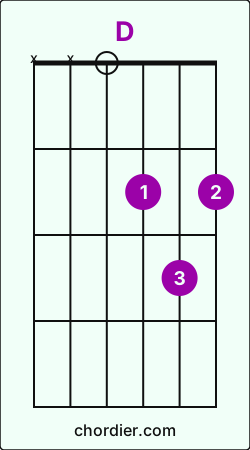 Guitar D chord diagram
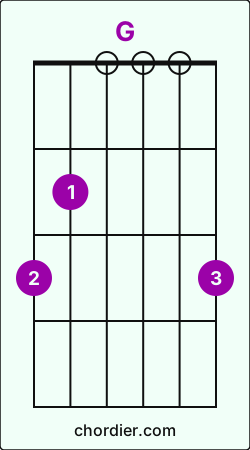 Guitar G chord diagram
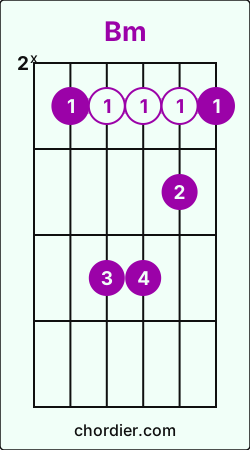 Guitar Bm chord diagram
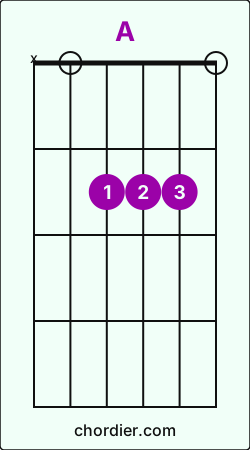 Guitar A chord diagram
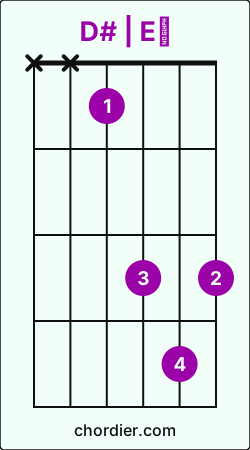 Guitar D# | E♭ chord diagram
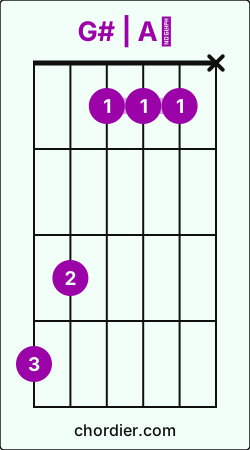 Guitar G# | A♭ chord diagram
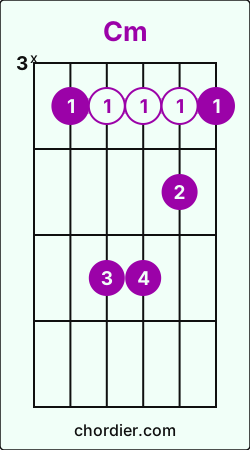 Guitar Cm chord diagram
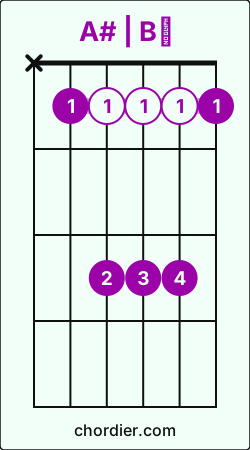 Guitar A# | B♭ chord diagram
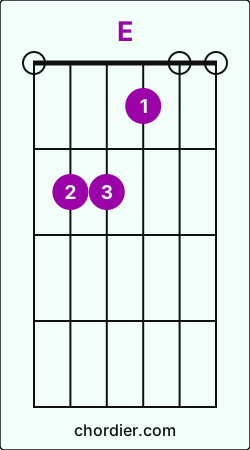 Guitar E chord diagram
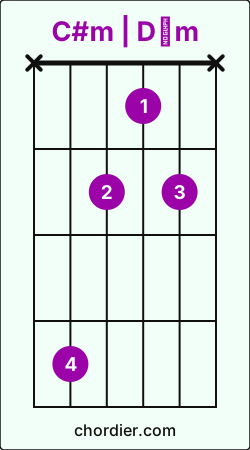 Guitar C#m | D♭m chord diagram
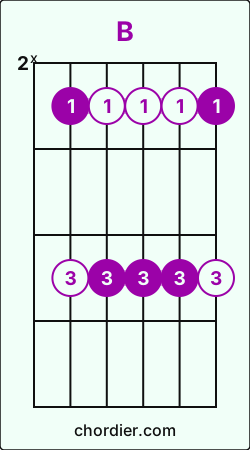 Guitar B chord diagram
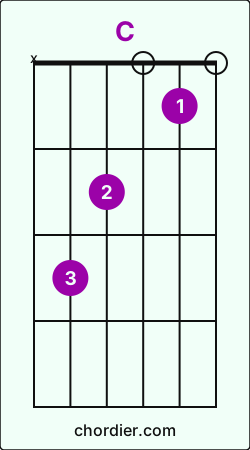 Guitar C chord diagram
[Opening]
The [D]mechanic raised up from under my hood
He [G]shook his head and said, “This ain’t good
Your [Bm]timing belt’s done [A]shrunk one size too [D]small
Those spark plug wires are a little too long
And your [G]main prods ponder’s nearly gone
Your [Bm]injector ports are [A]stripped and that ain’t [D]all”
[verse 2]
“The [D]torque converter’s running low on torque
And that [G]water pump’s nearly down a quart
But we [Bm]caught it all in [A]time so you’re in [D]luck”
He said, “I’ve got the time and I’ve got the parts
Just [G]give me the word and I’m ready to start
I [Bm]think we can bring her [A]in for eight [D]hundred bucks”
[chorus]
But [G]don’t be down [D]hearted, I can [A]fix it [G]for you, [D]sonny
[G]It won’t take [D]too long, it’ll [G]just [A]take [D]money
[verse 3]
Then he said, [D#]”Ain’t you that songwriter guy?”
I [G#]said, “Yes, I am,” he said, “So am I”
And he [Cm]sat down and played me a [A#]song by the grease rack [D#]
When he finished singing he gave me a smile
And I [G#]closed my eyes and pondered awhile
And he said, [Cm]”What do you think? [A#]Now don’t hold nothin’ [D#]back”
Well, I gave him my most sorrowful look
And I said, [G#]”This song’s got a broken hook
I can [Cm]order you a new one from [A#]Nashville but it won’t be [D#]cheap
And I know you’ve been using a cut-rate thesaurus
‘Cause your [G#]adverbs have backed up into your chorus
Now your [Cm]verse is running on [A#]verbs that are way too [D#]weak”
[chorus]
But [G#]don’t be down [D#]hearted, I can [A#]fix it [G#]for you, [D#]sonny
[G#]It won’t take [D#]too long, it’ll [G#]just [A#]take [D#]money
[verse 4]
And I said, [E]”Hold on friend now I’m not through
I [A]hate to be the one to give you the news
But your [C#m]whole melodic [B]structure’s worked itself [E]loose
It’s got so many dotted eighth notes in it
I’d [A]keep her under fifty beats per minute
I mean, [C#m]that’s just me talking, [B]it’s really up to [E]you”
And you’ve got a bad safety problem with
That [A]dominant chord with the augmented fifth
Just [C]see how dangerously [D]high it raises you [E]up
So just [E]go on over there and work on my car
I’ll [A]sit here by the fan and chances are
I can [C#m]straighten this thing out for [B]eighty-nine hundred bucks”
[Closing]
But [A]don’t be down [E]hearted, I can [B]fix it [A]for you, [E]sonny
[A]It won’t take [E]too long [C#m] [B]
You guessed it, [E]it may be a hit
How to play The Talkin' Song Repair Blues on Guitar (Step-by-step)
Alan Jackson - The Talkin' Song Repair Blues on guitar requires 12 chords and 21 core chord transitions. You can find the full step-by-step guide below. Before you start, tune your instrument. The song uses the ↓-↓↑-↓↑-↓↑ pattern; practice it muted first, or simplify to downstrokes while you learn the changes.
The Talkin' Song Repair Blues uses these transitions most often: D → G (7), D# → G# (7), and A → D (5). These transitions may feel a little challenging at first, but with steady practice you can play this song quickly.When you are ready, begin with D - G chord transition.
1. D → G chord transition
To move from D to G;
- Lift your index finger from G string fret 2 and place it on A string fret 2.
- Slide your middle finger from E string fret 2 to E string fret 3.
- Lift your ring finger from B string fret 3 and place it on E string fret 3.
2. G → Bm chord transition
To move from G to Bm;
- Lift your index finger from A string fret 2 and place it on E string fret 2.
- Slide your middle finger from E string fret 3 to B string fret 3.
- Lift your ring finger from E string fret 3 and place it on D string fret 4.
- Place pinky on G string fret 4.
3. Bm → A chord transition
To move from Bm to A;
- While playing Bm, lift your pinky from G string fret 4.
- Lift your index finger from E string fret 2 and place it on D string fret 2.
- Slide your middle finger from B string fret 3 to G string fret 2.
- Lift your ring finger from D string fret 4 and place it on B string fret 2.
4. A → D chord transition
To move from A to D;
- Lift your index finger from D string fret 2 and place it on G string fret 2.
- Slide your middle finger from G string fret 2 to E string fret 2.
- Slide your ring finger on B string from fret 2 to fret 3.
5. A → G chord transition
To move from A to G;
- Lift your index finger from D string fret 2 and place it on A string fret 2.
- Slide your middle finger from G string fret 2 to E string fret 3.
- Lift your ring finger from B string fret 2 and place it on E string fret 3.
6. D → D# chord transition
To move from D to D#;
- Lift your index finger from G string fret 2 and place it on D string fret 1.
- Slide your middle finger on E string from fret 2 to fret 3.
- Lift your ring finger from B string fret 3 and place it on G string fret 3.
- Place pinky on B string fret 4.
7. D# → G# chord transition
To move from D# to G#;
- While playing D#, lift your pinky from B string fret 4.
- Keep index finger on D string fret 1.
- Lift your middle finger from E string fret 3 and place it on A string fret 3.
- Slide your ring finger from G string fret 3 to E string fret 4.
8. G# → Cm chord transition
To move from G# to Cm;
- Lift your index finger from D string fret 1 and place it on B string fret 1.
- Slide your middle finger from A string fret 3 to D string fret 1.
- Lift your ring finger from E string fret 4 and place it on A string fret 3.
- Place pinky on E string fret 3.
9. Cm → A# chord transition
To move from Cm to A#;
- Lift your index finger from B string fret 1 and place it on A string fret 1.
- Slide your middle finger on D string from fret 1 to fret 3.
- Lift your ring finger from A string fret 3 and place it on G string fret 3.
- Slide your pinky from E string fret 3 to B string fret 3.
10. A# → D# chord transition
To move from A# to D#;
- Lift your index finger from A string fret 1 and place it on D string fret 1.
- Slide your middle finger from D string fret 3 to E string fret 3.
- Keep ring finger on G string fret 3.
- Slide your pinky on B string from fret 3 to fret 4.
11. A# → G# chord transition
To move from A# to G#;
- While playing A#, lift your pinky from B string fret 3.
- Lift your index finger from A string fret 1 and place it on D string fret 1.
- Slide your middle finger from D string fret 3 to A string fret 3.
- Lift your ring finger from G string fret 3 and place it on E string fret 4.
12. D# → E chord transition
To move from D# to E;
- While playing D#, lift your pinky from B string fret 4.
- Lift your index finger from D string fret 1 and place it on G string fret 1.
- Slide your middle finger from E string fret 3 to A string fret 2.
- Lift your ring finger from G string fret 3 and place it on D string fret 2.
13. E → A chord transition
To move from E to A;
- Lift your index finger from G string fret 1 and place it on D string fret 2.
- Slide your middle finger from A string fret 2 to G string fret 2.
- Lift your ring finger from D string fret 2 and place it on B string fret 2.
14. A → C#m chord transition
To move from A to C#m;
- Lift your index finger from D string fret 2 and place it on G string fret 1.
- Slide your middle finger from G string fret 2 to D string fret 2.
- Keep ring finger on B string fret 2.
- Place pinky on A string fret 4.
15. C#m → B chord transition
To move from C#m to B;
- Lift your index finger from G string fret 1 and place it on E string fret 2.
- Slide your middle finger on D string from fret 2 to fret 4.
- Lift your ring finger from B string fret 2 and place it on G string fret 4.
- Slide your pinky from A string fret 4 to B string fret 4.
16. B → E chord transition
To move from B to E;
- While playing B, lift your pinky from B string fret 4.
- Lift your index finger from E string fret 2 and place it on G string fret 1.
- Slide your middle finger from D string fret 4 to A string fret 2.
- Lift your ring finger from G string fret 4 and place it on D string fret 2.
17. A → C chord transition
To move from A to C;
- Lift your index finger from D string fret 2 and place it on B string fret 1.
- Slide your middle finger from G string fret 2 to D string fret 2.
- Lift your ring finger from B string fret 2 and place it on A string fret 3.
18. C → D chord transition
To move from C to D;
- Lift your index finger from B string fret 1 and place it on G string fret 2.
- Slide your middle finger from D string fret 2 to E string fret 2.
- Lift your ring finger from A string fret 3 and place it on B string fret 3.
19. D → E chord transition
To move from D to E;
- Slide your index finger on G string from fret 2 to fret 1.
- Slide your middle finger from E string fret 2 to A string fret 2.
- Lift your ring finger from B string fret 3 and place it on D string fret 2.
20. B → A chord transition
To move from B to A;
- While playing B, lift your pinky from B string fret 4.
- Lift your index finger from E string fret 2 and place it on D string fret 2.
- Slide your middle finger from D string fret 4 to G string fret 2.
- Lift your ring finger from G string fret 4 and place it on B string fret 2.
21. E → C#m chord transition
To move from E to C#m;
- Keep index finger on G string fret 1.
- Lift your middle finger from A string fret 2 and place it on D string fret 2.
- Slide your ring finger from D string fret 2 to B string fret 2.
- Place pinky on A string fret 4.
The Talkin' Song Repair Blues chord transition analysis
A short, data-driven summary of the chord flow in The Talkin' Song Repair Blues .
- The Talkin' Song Repair Blues includes 79 chord transitions, 21 of them unique.
- These transitions represent 0.02% of all chord transitions in Chordier.
- The Talkin' Song Repair Blues contains 3 of the top 10 transitions across Chordier.
- These transition patterns show how The Talkin' Song Repair Blues connects to the rest of Chordier. Mastering them helps you move to similar songs faster.After A, the most likely next chords across Chordier are D (29%), G (13%), and E (12%).
- A → D: 29%
- A → G: 13%
After D, the most likely next chords across Chordier are G (29%), A (17%), and Em (17%).- D → G: 29%
- D → A: 17%