
Meatloaf - Two Out Of Three Ain’t Bad Chords
Before you play, tune your guitar and use the tools below to set up your view and flow.
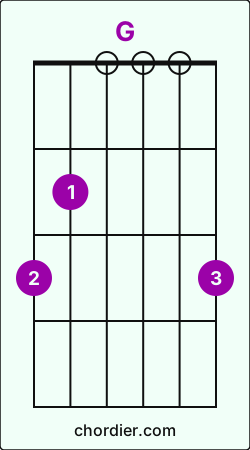 Guitar G chord diagram
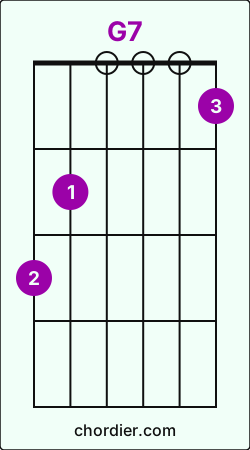 Guitar G7 chord diagram
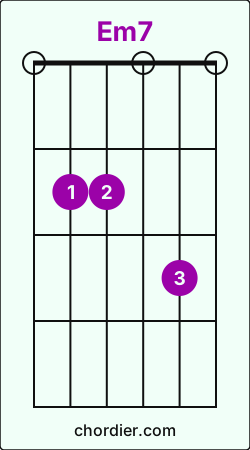 Guitar Em7 chord diagram
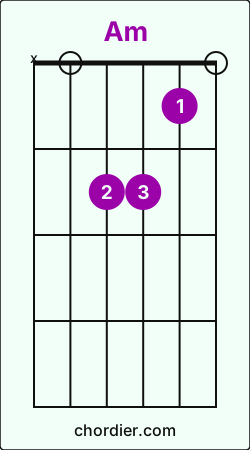 Guitar Am chord diagram
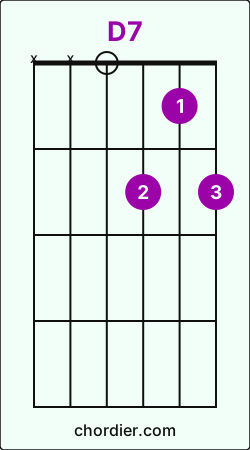 Guitar D7 chord diagram
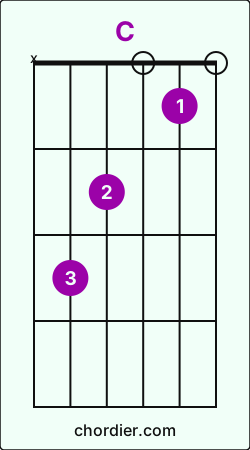 Guitar C chord diagram
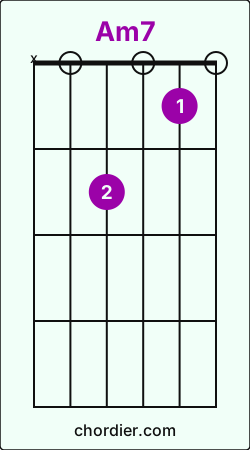 Guitar Am7 chord diagram
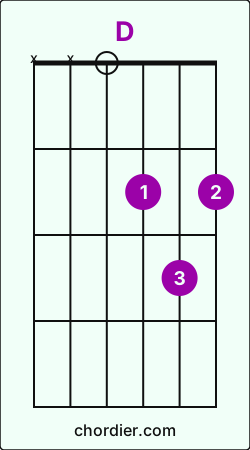 Guitar D chord diagram
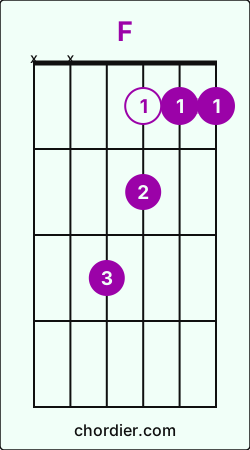 Guitar F chord diagram
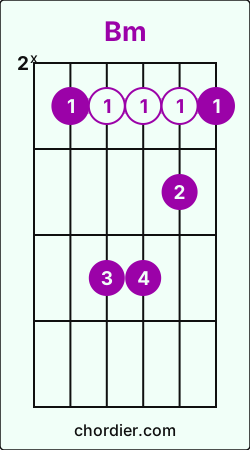 Guitar Bm chord diagram
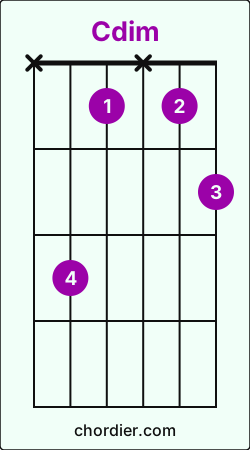 Guitar Cdim chord diagram
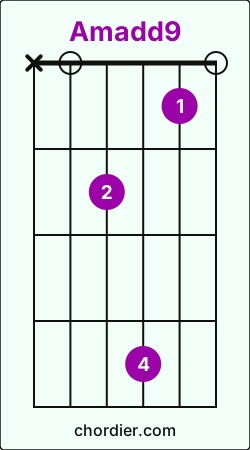 Guitar Amadd9 chord diagram
[Opening]
[G] [G7] [Em7] [Am] [D7]
[G]Baby we can talk all [G7]night [C]but that ain’t gettin us [G]nowhere
I’ve [G]told you [G7]everything I [Em7]possibly can
[Am7]There’s nothing left in[D]side of here
And [G]maybe you can cry all [G7]night
[verse 2]
But [C]that’ll never change the [G]way that I feel
The snow is [G7]really piling [Em7]up outside
I [Am7]wish you wouldn’t make me [D]leave here
[C]I poured it on and [D7]I [G]poured it out [Am] [G]
[verse 3]
[C]I tried to show you [D7]just how [G]much I care [Am] [G]
[C]I’m tired of words and [D7]I’m too [G]hoarse to [Em7]shout
[F]But you’ve been cold to me so long
I’m crying [C]icicles instead of [D7]tears
And [C]all I can [D7]do is [C]keep on [D7]telling you
[chorus]
I [G]want you I [Em7]need you
But there [C]ain’t no [D7]way I’m [Bm]ever gonna [Em7]love you
Now [Am]don’t be sad cause [C]two out of [Cdim]three ain’t [Em7]bad
Now [Am]don’t be sad cause [C]two out of [Cdim]three ain’t [G]bad
[verse 4]
You’ll [C]never find your gold [D7]on a [G]sandy beach [Am] [G]
You’ll [C]never drill for oil [D7]on a [G]city street [Am] [G]
I know you’re [C]looking for a ruby [D7]in a [G]mountain of rocks
But there [F]ain’t no coupe de ville
hiding at the bottom of a [D]crackerjack box
[verse 5]
[Bm]I can’t lie I can’t tell you that I’m [C]something I’m not
No matter how I try I’ll [Bm]never be able to give you something
[C]Something that I just haven’t [D7]got
[verse 6]
Now there is [G]only one girl that I will [G7]ever love
And that was [C]so many years a[G]go
And [G]though I know I’ll [G7]never get her [Em7]out of my heart
She never [Amadd9]loved me back [D]ooh I know
Well I re[G]member how she left me on a [G7]stormy night
[Closing]
She [C]kissed me and got out of our [G]bed
And though I [G]pleaded and I [G7]begged her not to [Em7]walk out that door
She [Amadd9]packed her bags and turned right a[D]way
And she [C]kept on [D7]telling me she [C]kept on [D7]telling me
She [C]kept on [D]telling me
[chorus]
I [G]want you I [Em7]need you
But there [C]ain’t no [D7]way I’m [Bm]ever gonna [Em7]love you
Now [Am]don’t be sad cause [C]two out of [Cdim]three ain’t [Em7]bad
Now [Am]don’t be sad cause [C]two out of [Cdim]three ain’t [G]bad
How to play Two Out Of Three Ain't Bad on Guitar (Step-by-step)
Meatloaf - Two Out Of Three Ain't Bad on guitar requires 12 chords and 29 core chord transitions. You can find the full step-by-step guide below. Before you start, tune your instrument. The song uses the ↓-↓↑-↓↑-↓↑ pattern; practice it muted first, or simplify to downstrokes while you learn the changes.
Two Out Of Three Ain't Bad uses these transitions most often: C → D7 (14), D7 → G (9), and G → G7 (9). These transitions may feel a little challenging at first, but with steady practice you can play this song quickly.When you are ready, begin with G - G7 chord transition.
1. G → G7 chord transition
To move from G to G7;
- Keep index finger on A string fret 2.
- Keep middle finger on E string fret 3.
- Slide your ring finger on E string from fret 3 to fret 1.
2. G7 → Em7 chord transition
To move from G7 to Em7;
- While playing G7, first lift your index finger and ring finger.
- Lift your middle finger from E string fret 3 and place it on A string fret 2.
3. Em7 → Am chord transition
To move from Em7 to Am;
- Lift your middle finger from A string fret 2 and place it on D string fret 2.
- Place index finger on B string fret 1.
- Place ring finger on G string fret 2.
4. Am → D7 chord transition
To move from Am to D7;
- Keep index finger on B string fret 1.
- Lift your middle finger from D string fret 2 and place it on G string fret 2.
- Slide your ring finger from G string fret 2 to E string fret 2.
5. D7 → G chord transition
To move from D7 to G;
- Lift your index finger from B string fret 1 and place it on A string fret 2.
- Slide your middle finger from G string fret 2 to E string fret 3.
- Slide your ring finger on E string from fret 2 to fret 3.
6. G7 → C chord transition
To move from G7 to C;
- Lift your index finger from A string fret 2 and place it on B string fret 1.
- Slide your middle finger from E string fret 3 to D string fret 2.
- Lift your ring finger from E string fret 1 and place it on A string fret 3.
7. C → G chord transition
To move from C to G;
- Lift your index finger from B string fret 1 and place it on A string fret 2.
- Slide your middle finger from D string fret 2 to E string fret 3.
- Lift your ring finger from A string fret 3 and place it on E string fret 3.
8. Em7 → Am7 chord transition
To move from Em7 to Am7;
- Lift your middle finger from A string fret 2 and place it on D string fret 2.
- Place index finger on B string fret 1.
9. Am7 → D chord transition
To move from Am7 to D;
- Lift your index finger from B string fret 1 and place it on G string fret 2.
- Slide your middle finger from D string fret 2 to E string fret 2.
- Place ring finger on B string fret 3.
10. D → G chord transition
To move from D to G;
- Lift your index finger from G string fret 2 and place it on A string fret 2.
- Slide your middle finger from E string fret 2 to E string fret 3.
- Lift your ring finger from B string fret 3 and place it on E string fret 3.
11. D → C chord transition
To move from D to C;
- Lift your index finger from G string fret 2 and place it on B string fret 1.
- Slide your middle finger from E string fret 2 to D string fret 2.
- Lift your ring finger from B string fret 3 and place it on A string fret 3.
12. C → D7 chord transition
To move from C to D7;
- Keep index finger on B string fret 1.
- Lift your middle finger from D string fret 2 and place it on G string fret 2.
- Slide your ring finger from A string fret 3 to E string fret 2.
13. G → Am chord transition
To move from G to Am;
- Lift your index finger from A string fret 2 and place it on B string fret 1.
- Slide your middle finger from E string fret 3 to D string fret 2.
- Lift your ring finger from E string fret 3 and place it on G string fret 2.
14. G → Em7 chord transition
To move from G to Em7;
- While playing G, first lift your index finger and ring finger.
- Lift your middle finger from E string fret 3 and place it on A string fret 2.
15. Em7 → F chord transition
To move from Em7 to F;
- Lift your middle finger from A string fret 2 and place it on G string fret 2.
- Place index finger on E string fret 1.
- Place ring finger on A string fret 3.
- Place pinky on D string fret 3.
16. F → C chord transition
To move from F to C;
- While playing F, lift your pinky from D string fret 3.
- Lift your index finger from E string fret 1 and place it on B string fret 1.
- Slide your middle finger from G string fret 2 to D string fret 2.
- Keep ring finger on A string fret 3.
17. Em7 → C chord transition
To move from Em7 to C;
- Lift your middle finger from A string fret 2 and place it on D string fret 2.
- Place index finger on B string fret 1.
- Place ring finger on A string fret 3.
18. D7 → Bm chord transition
To move from D7 to Bm;
- Lift your index finger from B string fret 1 and place it on E string fret 2.
- Slide your middle finger from G string fret 2 to B string fret 3.
- Lift your ring finger from E string fret 2 and place it on D string fret 4.
- Place pinky on G string fret 4.
19. Bm → Em7 chord transition
To move from Bm to Em7;
- While playing Bm, first lift your index finger, ring finger, and pinky.
- Lift your middle finger from B string fret 3 and place it on A string fret 2.
20. Am → C chord transition
To move from Am to C;
- Keep index finger on B string fret 1.
- Keep middle finger on D string fret 2.
- Lift your ring finger from G string fret 2 and place it on A string fret 3.
21. C → Cdim chord transition
To move from C to Cdim;
- Lift your index finger from B string fret 1 and place it on D string fret 1.
- Slide your middle finger from D string fret 2 to B string fret 1.
- Lift your ring finger from A string fret 3 and place it on E string fret 2.
- Place pinky on A string fret 3.
22. Cdim → Em7 chord transition
To move from Cdim to Em7;
- While playing Cdim, first lift your index finger, ring finger, and pinky.
- Lift your middle finger from B string fret 1 and place it on A string fret 2.
23. Cdim → G chord transition
To move from Cdim to G;
- While playing Cdim, lift your pinky from A string fret 3.
- Lift your index finger from D string fret 1 and place it on A string fret 2.
- Slide your middle finger from B string fret 1 to E string fret 3.
- Slide your ring finger on E string from fret 2 to fret 3.
24. G → F chord transition
To move from G to F;
- Lift your index finger from A string fret 2 and place it on E string fret 1.
- Slide your middle finger from E string fret 3 to G string fret 2.
- Lift your ring finger from E string fret 3 and place it on A string fret 3.
- Place pinky on D string fret 3.
25. F → D chord transition
To move from F to D;
- While playing F, lift your pinky from D string fret 3.
- Lift your index finger from E string fret 1 and place it on G string fret 2.
- Slide your middle finger from G string fret 2 to E string fret 2.
- Lift your ring finger from A string fret 3 and place it on B string fret 3.
26. D → Bm chord transition
To move from D to Bm;
- Lift your index finger from G string fret 2 and place it on E string fret 2.
- Slide your middle finger from E string fret 2 to B string fret 3.
- Lift your ring finger from B string fret 3 and place it on D string fret 4.
- Place pinky on G string fret 4.
27. Bm → C chord transition
To move from Bm to C;
- While playing Bm, lift your pinky from G string fret 4.
- Lift your index finger from E string fret 2 and place it on B string fret 1.
- Slide your middle finger from B string fret 3 to D string fret 2.
- Lift your ring finger from D string fret 4 and place it on A string fret 3.
28. Em7 → Amadd9 chord transition
To move from Em7 to Amadd9;
- Lift your middle finger from A string fret 2 and place it on D string fret 2.
- Place index finger on B string fret 1.
- Place pinky on G string fret 4.
29. Amadd9 → D chord transition
To move from Amadd9 to D;
- While playing Amadd9, lift your pinky from G string fret 4.
- Lift your index finger from B string fret 1 and place it on G string fret 2.
- Slide your middle finger from D string fret 2 to E string fret 2.
- Place ring finger on B string fret 3.
Two Out Of Three Ain't Bad chord transition analysis
A short, data-driven summary of the chord flow in Two Out Of Three Ain't Bad.
- Two Out Of Three Ain't Bad includes 111 chord transitions, 29 of them unique.
- These transitions represent 0.03% of all chord transitions in Chordier.
- Two Out Of Three Ain't Bad contains 6 of the top 10 transitions across Chordier.
- These transition patterns show how Two Out Of Three Ain't Bad connects to the rest of Chordier. Mastering them helps you move to similar songs faster.After G, the most likely next chords across Chordier are C (25%), D (24%), and Am (13%).
- G → C: 25%
- G → Am: 13%
After C, the most likely next chords across Chordier are G (35%), F (16%), and D (11%).- C → G: 35%
- C → D: 11%