
Laufey - Valentine Chords
Before you play, tune your guitar and use the tools below to set up your view and flow.
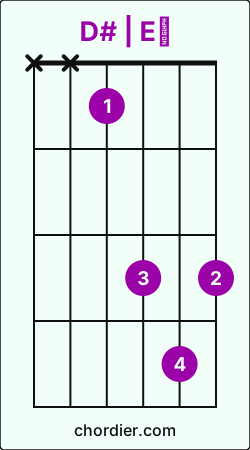 Guitar D# | E♭ chord diagram
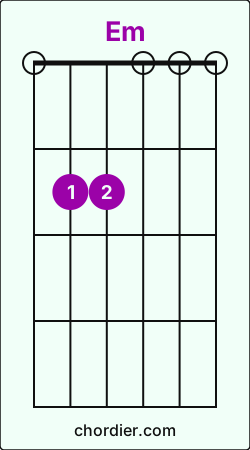 Guitar Em chord diagram
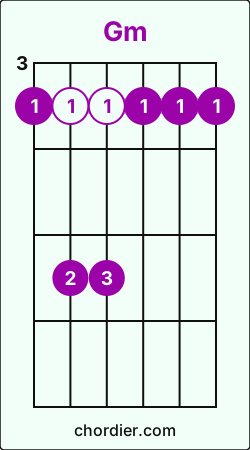 Guitar Gm chord diagram
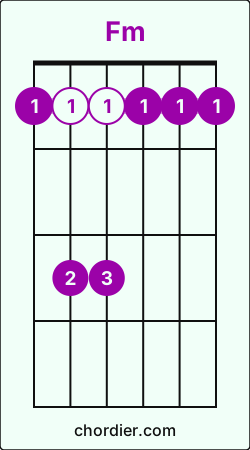 Guitar Fm chord diagram
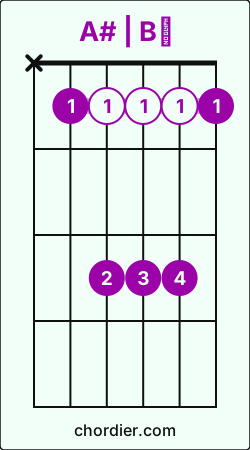 Guitar A# | B♭ chord diagram
- Guitar A# | B♭ chord diagram
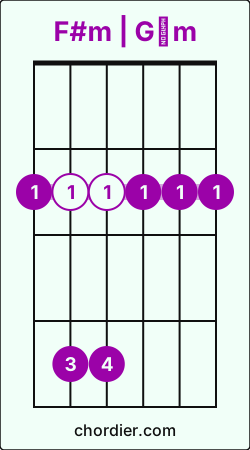 Guitar F#m | G♭m chord diagram
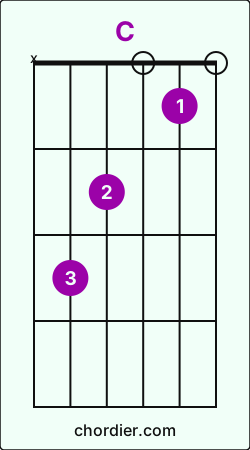 Guitar C chord diagram
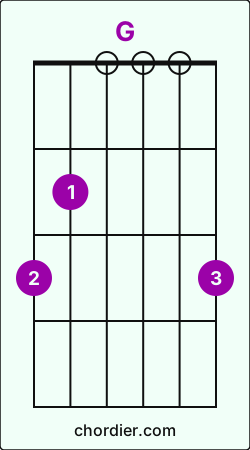 Guitar G chord diagram
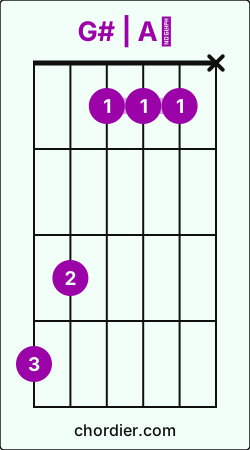 Guitar G# | A♭ chord diagram
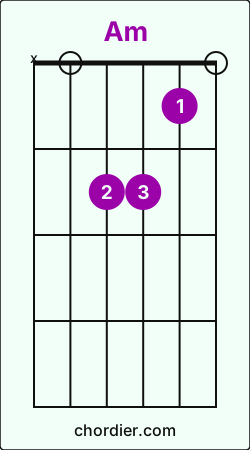 Guitar Am chord diagram
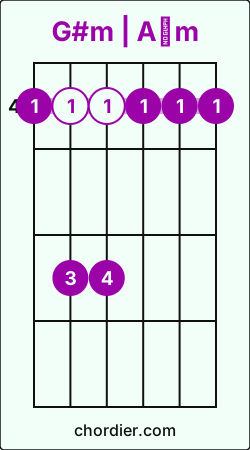 Guitar G#m | A♭m chord diagram
[Opening]
[D#] [Em] [Gm] [Fm] [A#]
I‘ve [D#]rejected [A#]affection, for [D#]years and [Bb]years
Now I [D#]have it and [Gm]damn it, [F#m]it‘s [Fm]kind of [A#]weird
He [Gm]tells me I‘m [C]pretty, don’t know [Fm]how to [C]respond
I [Fm]tell him that he‘s pretty too, can [A#]I say that? Don‘t [Bb]have a clue
[verse 2]
With [D#]every passing [A#]moment, I [D#]surprise my[A#]self
I‘m [D#]scared of flies, I‘m [G]scared of guys, [G#]someone please [A#]help
Cause [Gm]I think I‘ve [C]fallen, in [Fm]love this [C]time
I [Fm]blinked and [Gm] [G#]suddenly I [Am]had a [A#] [G#m]Valentine, (Be my [D#]valentine)
[verse 3]
[A#] [D#] [A#] [D#] [C]
[Fm] [C] [Fm] [C] [Fm] [C]
[Fm] [A#](Scatting dada doo waa boo waa doo)
[Fm]What if he‘s the last [A#]one I kiss?
[Fm]What if he‘s the only [A#]one I‘ll ever miss?
[Gm]Maybe I should run, I‘m [C]only twenty-one
[Fm]I don‘t even know who I [Em]want to become
[verse 4]
I‘ve [D#]lost all [A#]control, of my [D#]heartbeat [Bb]now
Got [Gm]caught in a [F#m]romance with [Fm]him some[A#]how
I [Gm]still feel a [C]shock through [Fm]every [C]bone
[Fm]When I hear an “I love you”, ’cause [A#]now I‘ve got [Bb]someone to lose
[Closing]
[D#]The first [A#]one to ever, [D#]like me [Bb]back
I‘m [Gm]seconds away from a [C]heart attack
[Fm]How the hell did I fall in [Em]love this time?
And honestly, I can‘t believe I [C]get to call you mine
I [Fm]blinked and [Gm] [G#]suddenly I [Am]had a [A#] [D#]Valentine
How to play Valentine on Guitar (Step-by-step)
Laufey - Valentine on guitar requires 12 chords and 25 core chord transitions. You can find the full step-by-step guide below. Before you start, tune your instrument. The song uses the ↓↑-↓↑-↓↑-↓↑ pattern; practice it muted first, or simplify to downstrokes while you learn the changes.
Valentine uses these transitions most often: C → Fm (13), A# → D# (9), and Fm → A# (8). These transitions may feel a little challenging at first, but with steady practice you can play this song quickly.When you are ready, begin with D# - Em chord transition.
1. D# → Em chord transition
To move from D# to Em;
- While playing D#, first lift your index finger and pinky.
- Lift your middle finger from E string fret 3 and place it on A string fret 2.
- Slide your ring finger from G string fret 3 to D string fret 2.
2. Em → Gm chord transition
To move from Em to Gm;
- Lift your middle finger from A string fret 2 and place it on E string fret 3.
- Slide your ring finger from D string fret 2 to B string fret 3.
- Place index finger on A string fret 1.
- Place pinky on E string fret 3.
3. Gm → Fm chord transition
To move from Gm to Fm;
- While playing Gm, lift your middle finger from E string fret 3.
- Lift your index finger from A string fret 1 and place it on E string fret 1.
- Slide your ring finger from B string fret 3 to A string fret 3.
- Lift your pinky from E string fret 3 and place it on D string fret 3.
4. Fm → A# chord transition
To move from Fm to A#;
- Lift your index finger from E string fret 1 and place it on A string fret 1.
- Slide your ring finger from A string fret 3 to G string fret 3.
- Lift your pinky from D string fret 3 and place it on B string fret 3.
- Place middle finger on D string fret 3.
5. A# → D# chord transition
To move from A# to D#;
- Lift your index finger from A string fret 1 and place it on D string fret 1.
- Slide your middle finger from D string fret 3 to E string fret 3.
- Keep ring finger on G string fret 3.
- Slide your pinky on B string from fret 3 to fret 4.
6. D# → Bb chord transition
To move from D# to Bb;
- Lift your index finger from D string fret 1 and place it on A string fret 1.
- Slide your middle finger from E string fret 3 to D string fret 3.
- Keep ring finger on G string fret 3.
- Slide your pinky on B string from fret 4 to fret 3.
7. D# → Gm chord transition
To move from D# to Gm;
- Lift your index finger from D string fret 1 and place it on A string fret 1.
- Slide your middle finger from E string fret 3 to E string fret 3.
- Lift your ring finger from G string fret 3 and place it on B string fret 3.
- Slide your pinky from B string fret 4 to E string fret 3.
8. Gm → F#m chord transition
To move from Gm to F#m;
- While playing Gm, lift your middle finger from E string fret 3.
- Lift your index finger from A string fret 1 and place it on E string fret 2.
- Slide your ring finger from B string fret 3 to A string fret 4.
- Lift your pinky from E string fret 3 and place it on D string fret 4.
9. F#m → Fm chord transition
To move from F#m to Fm;
- Slide your index finger on E string from fret 2 to fret 1.
- Slide your ring finger on A string from fret 4 to fret 3.
- Slide your pinky on D string from fret 4 to fret 3.
10. A# → Gm chord transition
To move from A# to Gm;
- Keep index finger on A string fret 1.
- Lift your middle finger from D string fret 3 and place it on E string fret 3.
- Slide your ring finger from G string fret 3 to B string fret 3.
- Lift your pinky from B string fret 3 and place it on E string fret 3.
11. Gm → C chord transition
To move from Gm to C;
- While playing Gm, lift your pinky from E string fret 3.
- Lift your index finger from A string fret 1 and place it on B string fret 1.
- Slide your middle finger from E string fret 3 to D string fret 2.
- Lift your ring finger from B string fret 3 and place it on A string fret 3.
12. C → Fm chord transition
To move from C to Fm;
- While playing C, lift your middle finger from D string fret 2.
- Lift your index finger from B string fret 1 and place it on E string fret 1.
- Keep ring finger on A string fret 3.
- Place pinky on D string fret 3.
13. A# → Bb chord transition
To move from A# to Bb;
- Keep index finger on A string fret 1.
- Keep middle finger on D string fret 3.
- Keep ring finger on G string fret 3.
- Keep pinky on B string fret 3.
14. D# → G chord transition
To move from D# to G;
- While playing D#, lift your pinky from B string fret 4.
- Lift your index finger from D string fret 1 and place it on A string fret 2.
- Slide your middle finger from E string fret 3 to E string fret 3.
- Lift your ring finger from G string fret 3 and place it on E string fret 3.
15. G → G# chord transition
To move from G to G#;
- Lift your index finger from A string fret 2 and place it on D string fret 1.
- Slide your middle finger from E string fret 3 to A string fret 3.
- Lift your ring finger from E string fret 3 and place it on E string fret 4.
16. G# → A# chord transition
To move from G# to A#;
- Lift your index finger from D string fret 1 and place it on A string fret 1.
- Slide your middle finger from A string fret 3 to D string fret 3.
- Lift your ring finger from E string fret 4 and place it on G string fret 3.
- Place pinky on B string fret 3.
17. Gm → G# chord transition
To move from Gm to G#;
- While playing Gm, lift your pinky from E string fret 3.
- Lift your index finger from A string fret 1 and place it on D string fret 1.
- Slide your middle finger from E string fret 3 to A string fret 3.
- Lift your ring finger from B string fret 3 and place it on E string fret 4.
18. G# → Am chord transition
To move from G# to Am;
- Lift your index finger from D string fret 1 and place it on B string fret 1.
- Slide your middle finger from A string fret 3 to D string fret 2.
- Lift your ring finger from E string fret 4 and place it on G string fret 2.
19. Am → A# chord transition
To move from Am to A#;
- Lift your index finger from B string fret 1 and place it on A string fret 1.
- Slide your middle finger on D string from fret 2 to fret 3.
- Slide your ring finger on G string from fret 2 to fret 3.
- Place pinky on B string fret 3.
20. A# → G#m chord transition
To move from A# to G#m;
- While playing A#, lift your middle finger from D string fret 3.
- Lift your index finger from A string fret 1 and place it on E string fret 4.
- Slide your ring finger from G string fret 3 to A string fret 6.
- Lift your pinky from B string fret 3 and place it on D string fret 6.
21. G#m → D# chord transition
To move from G#m to D#;
- Lift your index finger from E string fret 4 and place it on D string fret 1.
- Slide your ring finger from A string fret 6 to G string fret 3.
- Lift your pinky from D string fret 6 and place it on B string fret 4.
- Place middle finger on E string fret 3.
22. D# → C chord transition
To move from D# to C;
- While playing D#, lift your pinky from B string fret 4.
- Lift your index finger from D string fret 1 and place it on B string fret 1.
- Slide your middle finger from E string fret 3 to D string fret 2.
- Lift your ring finger from G string fret 3 and place it on A string fret 3.
23. Fm → Em chord transition
To move from Fm to Em;
- While playing Fm, first lift your index finger and pinky.
- Lift your ring finger from A string fret 3 and place it on D string fret 2.
- Place middle finger on A string fret 2.
24. Bb → Gm chord transition
To move from Bb to Gm;
- Keep index finger on A string fret 1.
- Lift your middle finger from D string fret 3 and place it on E string fret 3.
- Slide your ring finger from G string fret 3 to B string fret 3.
- Lift your pinky from B string fret 3 and place it on E string fret 3.
25. Em → C chord transition
To move from Em to C;
- Lift your middle finger from A string fret 2 and place it on D string fret 2.
- Slide your ring finger from D string fret 2 to A string fret 3.
- Place index finger on B string fret 1.
Valentine chord transition analysis
A short, data-driven summary of the chord flow in Valentine.
- Valentine includes 90 chord transitions, 25 of them unique.
- These transitions represent 0.02% of all chord transitions in Chordier.
- Valentine contains 1 of the top 10 transitions across Chordier.
- These transition patterns show how Valentine connects to the rest of Chordier. Mastering them helps you move to similar songs faster.After Fm, the most likely next chords across Chordier are C (43%), Bb (5%), and Cm (5%).
- Fm → C: 43%
- Fm → Gm: 5%
After A#, the most likely next chords across Chordier are F (24%), C (16%), and D# (11%).- A# → D#: 11%
- A# → Gm: 3%