
The Beatles - When I’m Sixty Four Chords
Before you play, tune your guitar and use the tools below to set up your view and flow.
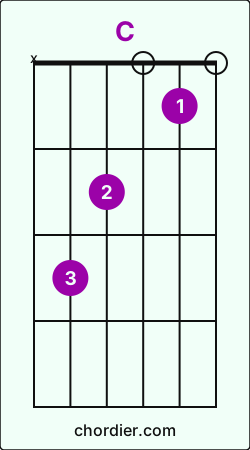 Guitar C chord diagram
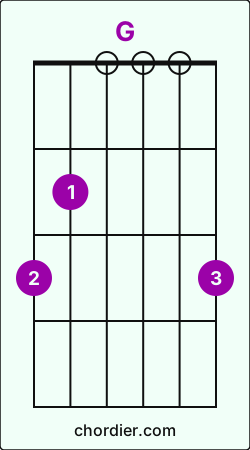 Guitar G chord diagram
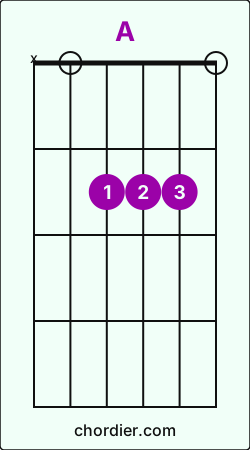 Guitar A chord diagram
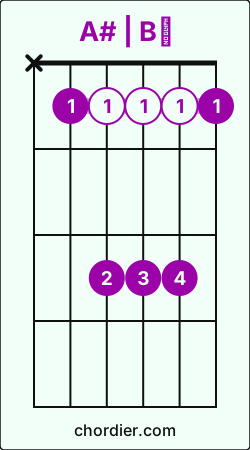 Guitar A# | B♭ chord diagram
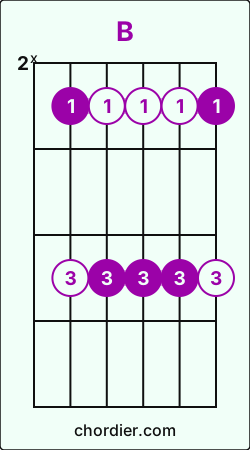 Guitar B chord diagram
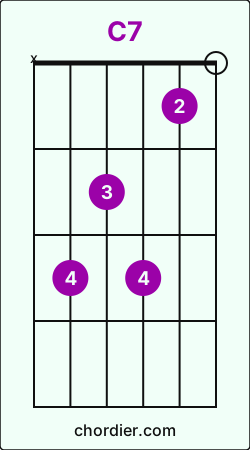 Guitar C7 chord diagram
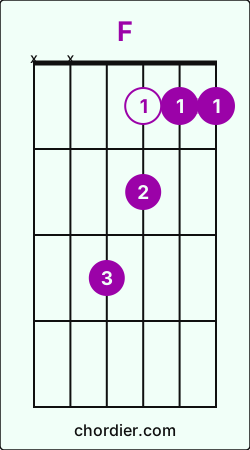 Guitar F chord diagram
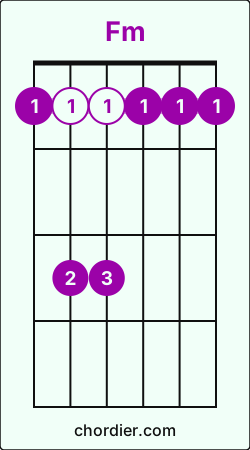 Guitar Fm chord diagram
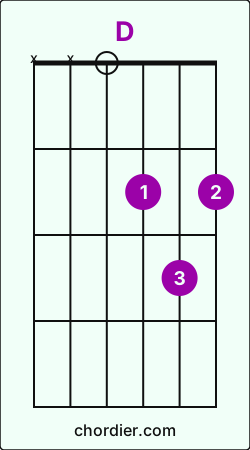 Guitar D chord diagram
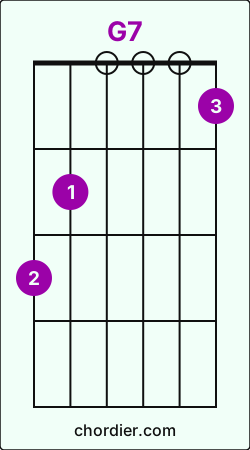 Guitar G7 chord diagram
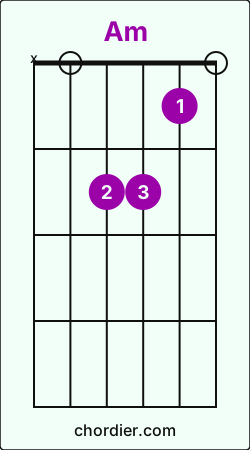 Guitar Am chord diagram
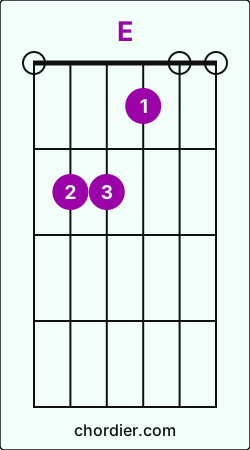 Guitar E chord diagram
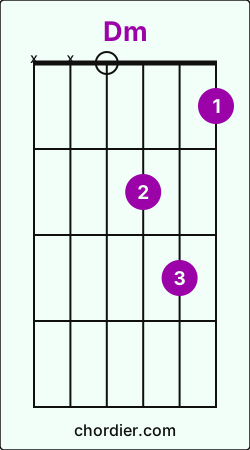 Guitar Dm chord diagram
[Opening]
[C]When I get older losing my hair,
Many years from [G]now,
Will you still be sending me a valentine
[G] [A]Birthday [Bb] [B]greetings [C]bottle of wine?
[verse 2]
[C]If I’d been out till quarter to three
[C7]Would you lock the [F]door,
[F]Will you still [Fm]need me, [C]will you still [A]feed me,
[D]When I’m [G7] [C]sixty-four?
[verse 3]
[Am] [G] [Am]
[Am]You’ll be older [E]too,
[Am]ah ah ah ah ah [Dm]
And if you say the word,
[F]I could [G]stay with [C]you.
[verse 4]
[G] [G] [B] [D] [F]
[C]I could be handy mending a fuse
When your lights have [G]gone.
You can knit a sweater by the fireside
[G] [A]Sunday [Bb] [B]mornings [C]go for a ride.
[verse 5]
[C]Doing the garden, digging the weeds,
[C7]Who could ask for [F]more?
[F]Will you still [Fm]need me, [C]will you still [A]feed me,
[D]When I’m [G7]s[C]ixty-four?
[verse 6]
[Am]Every summer we can rent
a cottage in the Isle of [G]Wight,
If it’s not too [Am]dear
[Am]We shall scrimp and [E]save
[Am]ah ah[Dm]
Grandchildren on your knee
[F]Vera, [G]Chuck, and [C]Dave
[verse 7]
[G] [G] [B] [D] [F]
[C]Send me a postcard, drop me a line,
Stating point of [G]view.
Indicate precisely what you mean to say
[G]Yours [A] [Bb]sin[B]cerely, [C]Wasting Away.
[Closing]
[C]Give me your answer, fill in a form
[C7]Mine for [F]evermore
[F]Will you still [Fm]need me, [C]will you still [A]feed me,
[D]When I’m [G7]s[C]ixty-four?
How to play When I'm Sixty Four on Guitar (Step-by-step)
The Beatles - When I'm Sixty Four on guitar requires 13 chords and 23 core chord transitions. You can find the full step-by-step guide below. Before you start, tune your instrument. The song uses the ↓-↓↓↑ pattern; practice it muted first, or simplify to downstrokes while you learn the changes.
When I'm Sixty Four uses these transitions most often: C → G (5), A → Bb (3), and A → D (3). These transitions may feel a little challenging at first, but with steady practice you can play this song quickly.When you are ready, begin with C - G chord transition.
1. C → G chord transition
To move from C to G;
- Lift your index finger from B string fret 1 and place it on A string fret 2.
- Slide your middle finger from D string fret 2 to E string fret 3.
- Lift your ring finger from A string fret 3 and place it on E string fret 3.
2. G → A chord transition
To move from G to A;
- Lift your index finger from A string fret 2 and place it on D string fret 2.
- Slide your middle finger from E string fret 3 to G string fret 2.
- Lift your ring finger from E string fret 3 and place it on B string fret 2.
3. A → Bb chord transition
To move from A to Bb;
- Lift your index finger from D string fret 2 and place it on A string fret 1.
- Slide your middle finger from G string fret 2 to D string fret 3.
- Lift your ring finger from B string fret 2 and place it on G string fret 3.
- Place pinky on B string fret 3.
4. Bb → B chord transition
To move from Bb to B;
- Lift your index finger from A string fret 1 and place it on E string fret 2.
- Slide your middle finger on D string from fret 3 to fret 4.
- Slide your ring finger on G string from fret 3 to fret 4.
- Slide your pinky on B string from fret 3 to fret 4.
5. B → C chord transition
To move from B to C;
- While playing B, lift your pinky from B string fret 4.
- Lift your index finger from E string fret 2 and place it on B string fret 1.
- Slide your middle finger on D string from fret 4 to fret 2.
- Lift your ring finger from G string fret 4 and place it on A string fret 3.
6. C → C7 chord transition
To move from C to C7;
- Keep index finger on B string fret 1.
- Keep middle finger on D string fret 2.
- Keep ring finger on A string fret 3.
- Place pinky on G string fret 3.
7. C7 → F chord transition
To move from C7 to F;
- Lift your index finger from B string fret 1 and place it on E string fret 1.
- Slide your middle finger from D string fret 2 to G string fret 2.
- Keep ring finger on A string fret 3.
- Lift your pinky from G string fret 3 and place it on D string fret 3.
8. F → Fm chord transition
To move from F to Fm;
- While playing F, lift your middle finger from G string fret 2.
- Keep index finger on E string fret 1.
- Keep ring finger on A string fret 3.
- Keep pinky on D string fret 3.
9. Fm → C chord transition
To move from Fm to C;
- While playing Fm, lift your pinky from D string fret 3.
- Lift your index finger from E string fret 1 and place it on B string fret 1.
- Keep ring finger on A string fret 3.
- Place middle finger on D string fret 2.
10. C → A chord transition
To move from C to A;
- Lift your index finger from B string fret 1 and place it on D string fret 2.
- Slide your middle finger from D string fret 2 to G string fret 2.
- Lift your ring finger from A string fret 3 and place it on B string fret 2.
11. A → D chord transition
To move from A to D;
- Lift your index finger from D string fret 2 and place it on G string fret 2.
- Slide your middle finger from G string fret 2 to E string fret 2.
- Slide your ring finger on B string from fret 2 to fret 3.
12. D → G7 chord transition
To move from D to G7;
- Lift your index finger from G string fret 2 and place it on A string fret 2.
- Slide your middle finger from E string fret 2 to E string fret 3.
- Lift your ring finger from B string fret 3 and place it on E string fret 1.
13. G7 → C chord transition
To move from G7 to C;
- Lift your index finger from A string fret 2 and place it on B string fret 1.
- Slide your middle finger from E string fret 3 to D string fret 2.
- Lift your ring finger from E string fret 1 and place it on A string fret 3.
14. C → Am chord transition
To move from C to Am;
- Keep index finger on B string fret 1.
- Keep middle finger on D string fret 2.
- Lift your ring finger from A string fret 3 and place it on G string fret 2.
15. Am → G chord transition
To move from Am to G;
- Lift your index finger from B string fret 1 and place it on A string fret 2.
- Slide your middle finger from D string fret 2 to E string fret 3.
- Lift your ring finger from G string fret 2 and place it on E string fret 3.
16. Am → E chord transition
To move from Am to E;
- Lift your index finger from B string fret 1 and place it on G string fret 1.
- Slide your middle finger from D string fret 2 to A string fret 2.
- Lift your ring finger from G string fret 2 and place it on D string fret 2.
17. Am → Dm chord transition
To move from Am to Dm;
- Lift your index finger from B string fret 1 and place it on E string fret 1.
- Slide your middle finger from D string fret 2 to G string fret 2.
- Lift your ring finger from G string fret 2 and place it on B string fret 3.
18. Dm → F chord transition
To move from Dm to F;
- Lift your index finger from E string fret 1 and place it on E string fret 1.
- Keep middle finger on G string fret 2.
- Slide your ring finger from B string fret 3 to A string fret 3.
- Place pinky on D string fret 3.
19. F → G chord transition
To move from F to G;
- While playing F, lift your pinky from D string fret 3.
- Lift your index finger from E string fret 1 and place it on A string fret 2.
- Slide your middle finger from G string fret 2 to E string fret 3.
- Lift your ring finger from A string fret 3 and place it on E string fret 3.
20. G → B chord transition
To move from G to B;
- Lift your index finger from A string fret 2 and place it on E string fret 2.
- Slide your middle finger from E string fret 3 to D string fret 4.
- Lift your ring finger from E string fret 3 and place it on G string fret 4.
- Place pinky on B string fret 4.
21. B → D chord transition
To move from B to D;
- While playing B, lift your pinky from B string fret 4.
- Lift your index finger from E string fret 2 and place it on G string fret 2.
- Slide your middle finger from D string fret 4 to E string fret 2.
- Lift your ring finger from G string fret 4 and place it on B string fret 3.
22. D → F chord transition
To move from D to F;
- Lift your index finger from G string fret 2 and place it on E string fret 1.
- Slide your middle finger from E string fret 2 to G string fret 2.
- Lift your ring finger from B string fret 3 and place it on A string fret 3.
- Place pinky on D string fret 3.
23. F → C chord transition
To move from F to C;
- While playing F, lift your pinky from D string fret 3.
- Lift your index finger from E string fret 1 and place it on B string fret 1.
- Slide your middle finger from G string fret 2 to D string fret 2.
- Keep ring finger on A string fret 3.
When I'm Sixty Four chord transition analysis
A short, data-driven summary of the chord flow in When I'm Sixty Four.
- When I'm Sixty Four includes 67 chord transitions, 23 of them unique.
- These transitions represent 0.02% of all chord transitions in Chordier.
- When I'm Sixty Four contains 5 of the top 10 transitions across Chordier.
- These transition patterns show how When I'm Sixty Four connects to the rest of Chordier. Mastering them helps you move to similar songs faster.After C, the most likely next chords across Chordier are G (35%), F (16%), and D (11%).
- C → G: 35%
- C → Am: 10%
After G, the most likely next chords across Chordier are C (25%), D (24%), and Am (13%).- G → C: 25%
- G → Am: 13%